Buying Guide · bakery equipment manufacturer
How to Evaluate a Bakery Equipment Manufacturer for an Export Project
 Written and reviewed by BelindaCEO of Shanghai Hongzhong · equipment selection and export project guidance
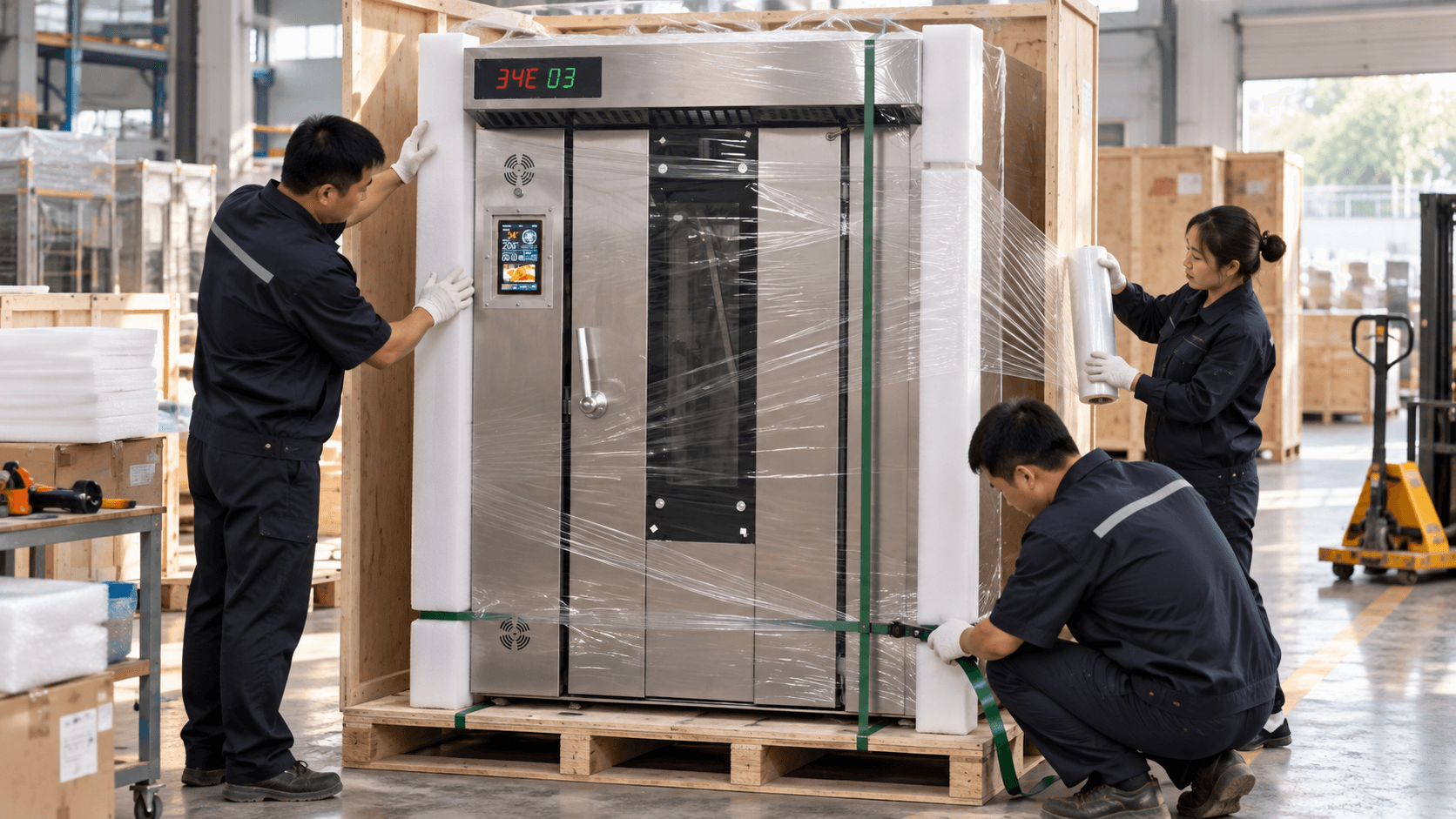
Selecting a bakery equipment manufacturer for an international project requires more than comparing websites and headline prices. The buyer must verify the actual supply scope, model specifications, product fit, factory test, export documents, installation boundaries and support route. A polished catalogue can begin the conversation, but it cannot replace configuration-specific evidence.
This guide gives overseas bakery owners, distributors and project teams a practical audit method. It does not claim that factory ownership alone guarantees quality, or that every intermediary adds no value. The objective is to identify who is responsible for design, manufacture, testing, documentation, shipment and support, then confirm those responsibilities in the order.
Define what you need the manufacturer to supply
Start with the bakery process and list each required stage. A bread project may include mixing, dividing, rounding, intermediate proofing, moulding, panning, final proofing, rotary baking, cooling and slicing. Cakes or cookies may require planetary mixing, depositing or forming equipment. Separate required machines from optional future stages.
State the product range, batch sizes, piece weights, trays or pans, target accepted output, shifts and dispatch window. Include the destination, site voltage, frequency, phase, fuel options, room dimensions and installation access. This information allows a manufacturer to propose a configuration rather than send a generic price list.
Ask the supplier to mark what it manufactures, what it sources and what another company will deliver. Sourced components or partner equipment are not automatically a problem, but the buyer needs one clear responsibility map and accurate model documentation.
Verify business identity and project responsibility
Confirm the legal contracting entity, quotation issuer, payment beneficiary and export party through appropriate business documents and independent checks. Names and addresses should be consistent. If a sales company, manufacturer and exporter are different entities, record the relationship and responsibility for warranty and support.
Use live communication to review the proposal and request a view of the relevant production and test areas when appropriate. A factory video can support due diligence, but edited footage does not prove the status of a specific order. Link evidence to the model, date and project.
Ask who approves the technical specification and who can authorize changes. Keep commercial negotiation separate from engineering approval so a price revision does not silently change voltage, heating method, tray format or included accessories.
Build a model-level specification register
Create one row for every machine with manufacturer, model, function, capacity basis, dimensions, mass, rated power in kW, voltage, frequency, phase, utilities, controls, materials where specified, included tooling and accessories. Mark every unknown as pending rather than guessing.
For ovens, identify tray capacity, tray size, rack arrangement, heating source, steam or water requirements and exhaust information. For mixers, state usable batch information and recipe assumptions; Hongzhong’s confirmed dough-mixer range starts at 60 L and planetary-mixer range starts at 50 L. For forming equipment, identify the proven product and tooling. Do not assume an unconfirmed function such as wire cutting.
Compare revisions before signing. A manufacturer may improve or adapt a model, but the offered machine must match the approved record. Attach the final specification and drawings to the purchase documents.
Separate rated values, calculations and test results
Ask how every capacity or consumption figure was obtained. A nameplate power rating is expressed in kW. Electricity actually consumed is measured in kWh over a defined time. A calculated line rate is not the same as accepted output during a representative production run.
Request assumptions for products per tray, trays per batch, cycle time, changeover and staffing. If the value comes from a different product or model, label it as a reference. Do not let an estimate become a guarantee through repeated copying.
Where a critical fact cannot be verified before the order, include a test or approval condition. A transparent pending item is safer than invented precision.
Assess product fit with a structured trial
Provide representative materials, recipe information, photographs and quality criteria. Agree on what the trial will demonstrate: dough handling, weight control, shape, pan placement, proofing, baking, depositing or slicing. Use the intended product range rather than one convenient demonstration item.
Record input condition, machine settings, elapsed time, accepted pieces, rejects and observations. Samples and video should be linked to the test date and equipment configuration. Ask which adjustments or tooling changes were needed.
A successful sample does not prove annual output or every future recipe. Record the limits of the trial and keep untested products as explicit open items.
Review engineering drawings before production
Request a general arrangement showing equipment footprint, operating zones, service clearance, door or panel access, product flow, operator positions and utility connection points. For a line, show transfer heights, conveyor widths, accumulation and the interface with existing equipment.
Provide the drawing to qualified destination professionals for electrical, structural, ventilation, fire-safety, water and drainage review. The manufacturer supplies equipment information; local specialists determine compliance and building work. Do not wait until the container arrives to discover that a package, oven or rack cannot pass through the access route.
Control drawing revisions. When a model, layout or utility changes, identify every affected document and obtain approval again.
Compare safety and destination requirements
Ask the manufacturer to state the supplied guards, interlocks, emergency stops, labels and manuals for the offered configuration. Provide the applicable destination and any buyer specification. Certification claims should be supported by documents whose product scope, model and issuing body can be checked.
Do not treat one component certificate as certification of the complete machine. Do not remove or bypass protective functions to meet a production trial. Qualified local personnel should approve installation and hazardous utility connections.
For the United States or other regulated destinations, the buyer should identify the authority having jurisdiction and applicable workplace, electrical, fuel and sanitation requirements early. For African projects, requirements vary by country and site; verify the actual destination rather than applying a continent-wide assumption.
Use a written factory acceptance test
Prepare the FAT before the machine is finished. Verify model, configuration, voltage, frequency, nameplate, controls, guards, included tooling and accessories. Test normal operation, agreed functions, stop behavior and restart. For rotary rack ovens, check door operation, rack engagement or platform, rotation, fan, controls and agreed steam functions.
For connected equipment, observe product at every handoff and simulate a routine downstream stop. Record settings and results rather than accepting a short promotional demonstration. Keep unresolved issues in an action list with owner and due date.
Photograph the actual machine, nameplate, accessories and packing. A generic video may explain the product family but does not prove the purchased unit.
Audit export packing and shipping scope
Request package count, dimensions, gross and net mass, packing method, lifting or handling instructions and packing list. Discuss moisture protection, restraints and protection of controls or finished surfaces for the agreed transport method. Confirm which parts are removed for shipment and how they are identified for assembly.
Define the Incoterms rule and named place in the contract. The International Chamber of Commerce publishes the Incoterms rules; the selected rule allocates delivery tasks and risks but does not replace a complete quotation or import plan. Source: ICC Incoterms rules.
Separate equipment, export packing, inland transport, ocean freight, insurance, destination charges, customs clearance, unloading and installation. Sea freight is not free by default. Ask a qualified customs broker to confirm destination documentation, tariff treatment and charges.
Verify installation and commissioning boundaries
Create a responsibility matrix for unloading, positioning, assembly, electrical work, fuel connection, ventilation, water, drainage, startup, testing and training. Mark manufacturer, buyer and local contractor responsibilities. Identify prerequisites and completion evidence.
Ask what remote support includes, available communication hours, language, information required for diagnosis and which work must be performed locally. Do not describe remote advice as on-site service. If travel is proposed, document visa, travel, accommodation, local transport, daily charges and schedule assumptions.
Commission the exact configuration after local utilities have been approved. Retain final drawings, settings, test records and operator handover.
Examine spare parts and maintenance support
Request model-specific routine wear items, critical spares, supplier part numbers and recommended startup stock. Ask which items are included and which are optional. A generic box of components is not a maintenance plan.
Review documentation for cleaning, inspection and preventive maintenance. Identify operator tasks and work requiring qualified technicians. Confirm how replacement parts are identified later and whether software, settings or special tools are needed.
Compare support lead time carefully. Availability, manufacturing, export preparation, transport, customs and installation are different stages. Do not treat a courier transit estimate as guaranteed return-to-production time.
Check documentation before final payment and shipment
Agree the required commercial invoice, packing list, bill of lading information, certificate documents where applicable, manuals, drawings, test records and origin documents before shipment. Assign responsibility for each document and confirm names, addresses, model descriptions and quantities.
Check that documents match the physical equipment and final order revision. Translation may be needed for local installation or operation; confirm which languages are supplied. Keep digital copies outside the shipping crate.
Use milestone evidence for payment only as agreed in the contract. Photographs, test acceptance and packing records can support a milestone, but the buyer should obtain appropriate commercial and legal advice for transaction risk.
Score proposals on equal scope
| Audit area | Evidence | Typical unresolved risk |
|---|---|---|
| Product fit | Representative trial and settings | Untested recipes or tooling |
| Capacity | Defined rate and accepted output basis | Maximum speed used as line output |
| Site fit | Approved layout and utility schedule | Access or local works omitted |
| Quality handover | Configuration-specific FAT | Generic demonstration only |
| Export scope | Packing list, delivery rule and responsibility matrix | Freight or destination costs assumed |
| Support | Parts list, manuals and escalation route | Vague lifetime-service promise |
Weight the score for the project’s real risks. A remote site may prioritize spare-parts identification and local maintainability. A high-mix bakery may prioritize changeover evidence. A regulated project may prioritize documentation and destination review.
Price should be compared after exclusions and local work are visible. The lowest equipment price can represent a different scope, while the highest price does not prove better engineering.
Recognize warning signs without making unsupported accusations
Pause when a supplier will not identify models, changes specifications without revision, offers incompatible capacity figures, uses unrelated images as evidence, avoids product trials or cannot explain installation boundaries. Ask for clarification and documentation before drawing a conclusion.
Be cautious with guaranteed savings, universal compliance claims, free international shipping or immediate global service promises that are not defined in the contract. Request the exact scope, conditions and responsible entity.
At the same time, do not reject a manufacturer because a document needs clarification. Use the audit to resolve gaps. Record the final evidence and remaining assumptions.
Review Hongzhong bakery equipment categories and model pages
Send a complete manufacturer enquiry
Provide products, quantities, piece weights, recipes relevant to selection, tray or pan drawings, accepted output, shifts, site utilities, room drawing, destination and requested delivery schedule. Identify existing equipment and local contractors. Ask for a model list, layout, utility schedule, capacity basis, trial plan, FAT, packing and support scope.
Submit your project brief for a configuration-specific equipment proposal
Run a technical clarification meeting before price negotiation
Ask each shortlisted supplier to walk through the same product matrix, layout and responsibility checklist. Resolve technical differences before requesting a final commercial comparison. Otherwise, pressure to match a price can remove tooling, testing, documents or installation work without making the change visible.
Use a question log with the supplier’s answer, evidence, owner and status. Close questions with a drawing, specification revision, test result or written exclusion. A verbal yes may be useful during discussion but should not be the final record for a configuration-sensitive function.
Review the process from receiving ingredients to packing, even if the quotation covers only part of it. This reveals boundary problems: a mixer discharge that does not match the divider, a tray format that does not fit the rack, a proofer that cannot receive the loaded trolley or an output conveyor that conflicts with the room.
After clarification, issue a common comparison version. Ask suppliers to identify deviations instead of rewriting the buyer’s requirement silently. Preserve useful alternatives as separately priced options with their technical effect explained.
Control changes after the order
Establish a change process for model, component, layout, program, voltage, fuel, tooling, accessories and delivery scope. A change request should state the reason, affected documents, price effect, schedule effect and whether retesting is required. Both technical and commercial representatives should approve it.
Do not allow an unavailable component to be replaced solely by a similar appearance or brand description. Ask for ratings, function, interface and any effect on certification, spare parts or software. Record the final installed component in the machine documentation.
Freeze the FAT revision before testing. If the test reveals a change, update the relevant specification and repeat the affected checks. At packing, reconcile the machine and accessories against the approved final revision rather than the original quotation.
Maintain a document index with revision dates for specifications, drawings, electrical information, parts lists, manuals, test records and packing lists. The latest documents should reach the installation team before the shipment, not remain in a sales conversation. This discipline reduces arguments about what was approved and makes future support more reliable.
Frequently asked questions
Is buying directly from a factory always better?
No. Evaluate the actual engineering, coordination, export and support scope. A capable distributor or integrator may add value; the contracting responsibilities must remain clear.
What proof should I request before ordering?
Request verified model specifications, drawings, product-fit evidence, a test plan, business and export documentation appropriate to the transaction, and a written responsibility matrix.
Can a catalogue capacity be guaranteed?
Not without defined products and conditions. Ask for the calculation or test basis and agree how accepted output will be measured.
Is installation included?
Only if the quotation states it. Separate unloading, local utilities, assembly, commissioning, travel and training responsibilities.
Should I request customer references?
They may support due diligence when privacy and accuracy are respected, but they do not replace testing and documentation for your configuration.
Conclusion
A reliable bakery equipment manufacturer evaluation turns marketing claims into project evidence. Define the process, verify every model, test representative products, approve drawings, inspect the ordered configuration and document export and support responsibilities. The result is a clearer technical and commercial decision.