Buying Guide · bakery equipment sea freight packaging
Sea Freight Packaging for Bakery Equipment: Preventing Moisture Damage
 Written and reviewed by BelindaCEO of Shanghai Hongzhong · equipment selection and export project guidance
Introduction
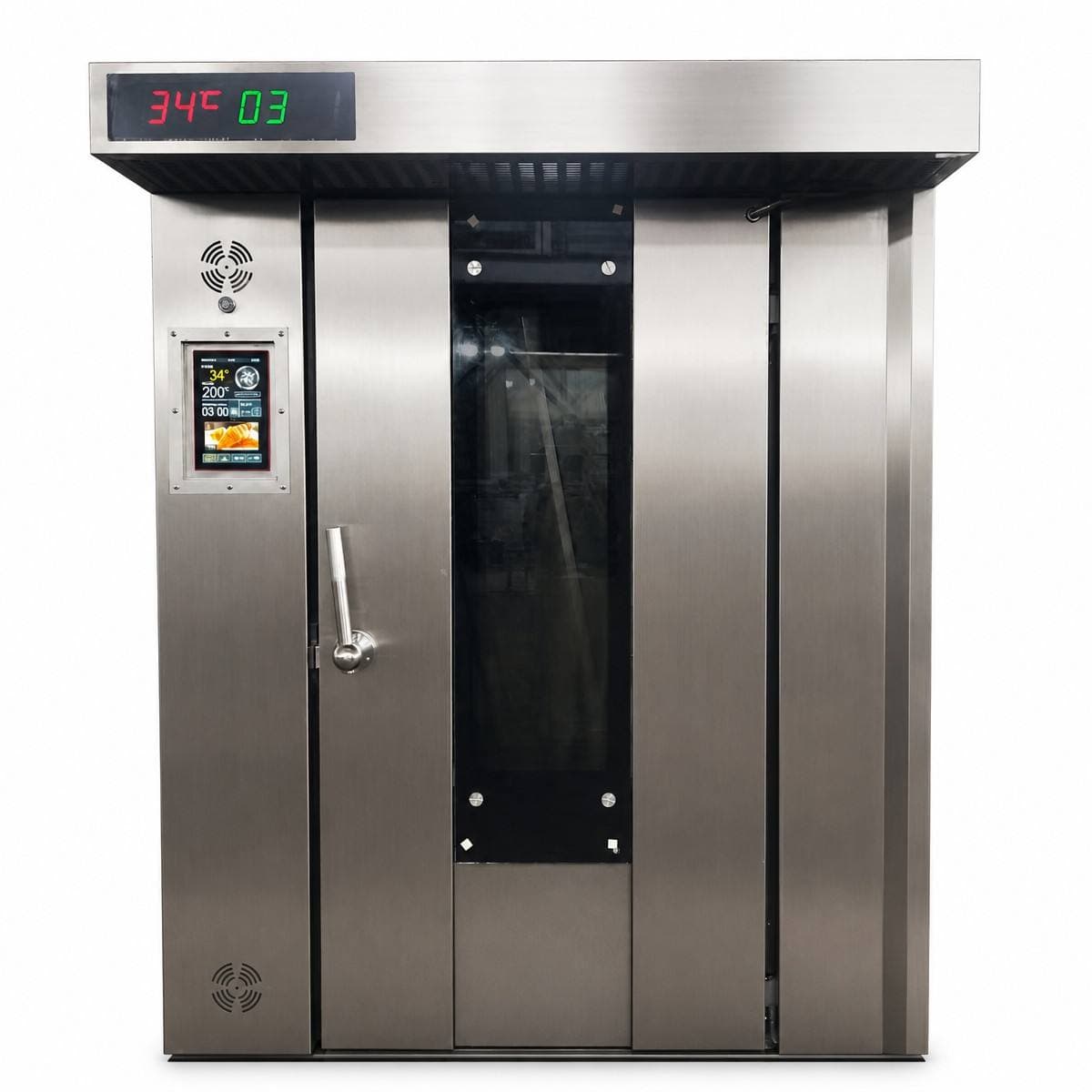
Bakery equipment packaging must be reviewed for the actual assembly: a rotary rack oven, mixer and depositor can require different support and preservation arrangements.
A bakery mixer or depositor can pass a functional trial and still arrive in a condition that delays installation. The machine may travel through a humid loading area, a sea voyage, a transshipment terminal, and temporary storage before reaching the bakery. Protective packaging therefore belongs in the purchase specification, alongside the model, utilities, and product application.
The useful question is not simply whether the supplier provides a wooden crate. It is whether the complete protection system addresses the machine, route, handling, and expected storage period. This guide helps overseas bakery-equipment buyers define that scope, compare quotations, and collect evidence before dispatch. It does not promise damage-free transport, replace a qualified packing design, or establish destination import clearance.
What does an export packing specification need to cover?
Specify mechanical support, restraint, moisture protection, protected components, handling instructions, identification, and the conditions under which the package may be stored. State who designs and supplies each element. A photograph of a closed crate cannot demonstrate what is happening inside it.
Separate the packing boundary from the freight boundary. The supplier might pack a machine while a forwarder packs the shipping container. The party handling the container then needs accurate package masses, dimensions, lifting information, and restraint requirements. Do not assume that an export-packing charge automatically includes container securing, cargo insurance, unloading, or inland transport.
Begin with the actual route
Identify origin, destination, likely transfer points, container arrangement, and expected waiting time. Distinguish a direct container movement from a shipment handled through several warehouses. If the final bakery is not ready, state the intended storage conditions before the packing design is approved.
Avoid using “Africa delivery” or “United States delivery” as a substitute for a logistics brief. Port, inland journey, season, handling facilities, and available covered storage can differ significantly within one country. Ask the forwarder to describe the planned transport chain and any remaining unknowns.
Understand why moisture protection matters
The IMO/ILO/UNECE CTU Code treats condensation as a cargo-packing concern, and its supporting material identifies damp packaging, timber, and loading conditions as possible sources of moisture. Its scope is broader than bakery machinery, but the principle is directly relevant: a container can contain moisture even when rain never enters through the doors. UNECE CTU Code; supporting condensation introduction.
Stainless exterior does not protect every component
A stainless outer panel does not establish that bearings, shafts, electrical enclosures, fasteners, and internal components tolerate the same exposure. Request the manufacturer's preservation instructions for the complete assembly. Identify surfaces that must remain suitable for food contact and any protective material that must be removed before commissioning.
Do not specify an anti-corrosion spray solely because it works on unrelated industrial equipment. Compatibility, residue removal, and the intended contact surface matter. The machine manufacturer should approve preservation products and provide the removal method. Keep that instruction with the commissioning documents rather than leaving it to the receiving operator to guess.
Arrival can be a separate exposure event
Ask how and where the package should be opened after transport. Moving cool cargo into a warmer, humid environment can create an additional moisture concern. The appropriate handling procedure depends on actual conditions and the equipment; avoid inventing one universal waiting period for every destination.
The receiving plan should identify a covered inspection area and a person authorized to make decisions if water or corrosion is found. Opening a package outdoors because a truck is waiting can undermine a protection strategy that worked throughout the voyage.
Specify a complete protection system
The base and restraint
Request a packing drawing or description showing the machine's support points, how it is fixed to the base, and how movable assemblies are restrained. Packaging should not transfer transport loads through components that were not designed to carry them. Have the machine maker and qualified packer approve the arrangement rather than copying the restraint from a different model.
Loose accessories need their own protection and identification. A nozzle, guard, bowl attachment, or control accessory moving inside a case can damage the machine or be mistaken for packing waste. Provide a package-level contents list and a clear place for small parts.
The moisture barrier and preservation method
Ask the packer to state the proposed barrier material, sealing approach, preservation products, and monitoring method where included. A loosely wrapped sheet is not equivalent to a designed sealed system. Likewise, the presence of desiccant does not prove that its quantity, placement, and protection period are appropriate.
Do not prescribe a number of desiccant bags from the machine weight alone. The packer needs to assess the enclosure, materials, initial moisture, route assumptions, and storage duration. Request the design basis and limitations in the quotation, especially when the equipment may remain packed after arrival.
Electrical and delicate assemblies
Ask which controls, displays, sensors, and removable fittings require specific protection. A control cabinet may have its own preservation requirements that differ from those of the main machine frame. Confirm whether transport restraints, caps, or protective inserts must be removed before electrical commissioning.
Mark any separately packed components so the receiving team can match them to the machine serial number. If an accessory needs careful orientation, the instruction should appear in the unpacking information and on the relevant package, rather than only in an email that the warehouse never receives.
Compare a crate with a closed export case
Buyers sometimes use “crate” and “case” interchangeably. Resolve the actual construction: open slatted protection, enclosed panels, base design, internal supports, and any weather or moisture barrier. Neither name alone establishes structural capacity, resistance to water entry, or suitability for outdoor storage.
For a mixer, ask about the bowl assembly and any transport locking requirements. For a depositor, ask about the hopper, depositing head, conveyor, and detachable tooling. For trays or trolleys, confirm how nesting, spacing, and surface protection prevent contact damage. These are inspection questions, not claims that one standard packing design fits every Hongzhong product.
The best arrangement is not always the heaviest case. Compare total protection, handling compatibility, destination unpacking, and the ability to inspect the machine without destroying essential evidence. Packing mass and dimensions also affect the freight quotation, so approve the design before assuming a transport price is final.
Mid-article CTA: request a defined packing scope
Send your equipment and destination requirements. Ask Shanghai Hongzhong to identify the proposed packing construction, preservation scope, package dimensions, and buyer or forwarder responsibilities. Sea freight, insurance, storage, and destination services should be quoted explicitly; they are not assumed to be free or included.
Check timber requirements without oversimplifying them
The IPPC's ISPM 15 standard addresses regulated wood packaging used in international trade and distinguishes certain processed-wood exemptions. A plywood panel does not establish that every component of a package is exempt: examine the base, blocking, bracing, and other wood as well. IPPC ISPM 15 standard.
For United States shipments, consult current APHIS information and have the importer or broker confirm applicable requirements for the actual packing. Other destinations require their own confirmation. A generic “fumigation-free” statement is not a substitute for checking the complete package and destination rules. APHIS wood-packaging import guidance.
Ask for traceable evidence
Where treatment and marking apply, ask which authorized party supplies the packaging and how compliance will be checked. Request clear photographs of relevant markings before loading, together with the package identification. Do not create a decorative mark or assume an unrelated certificate covers every timber component.
Clarify who resolves a nonconformity before the goods leave. Repacking at origin may be simpler than discovering a problem after freight has been booked, but responsibility and timing must be commercially agreed. This guide does not determine clearance or provide a country-by-country legal assessment.
Make shipment inspection possible before the case is closed
Use staged photographs
An effective evidence sequence starts with machine identity and visible condition, then records support and restraint, accessory packing, preservation, closure, and package marking. Request enough views to understand the arrangement. A set of nearly identical exterior photographs offers little information about internal protection.
Label the evidence by order, machine serial number where assigned, package number, and date. Distinguish factory testing evidence from shipment inspection evidence: a video showing a running machine does not establish that its controls were protected for transport. Keep original files when practical so the receiving team can inspect details.
Review exceptions while they can still be corrected
If the agreed packing description changes, record the revision and obtain approval before dispatch. Examples include a split shipment, accessories moved into a separate case, or a longer storage period. An undocumented substitution can invalidate assumptions used by the forwarder or buyer.
Use a short hold-point checklist rather than an informal instruction to “check everything.” Identify which observations require buyer review and who may authorize closure and release. This makes remote review more practical without pretending that photographs replace every physical inspection.
| Review stage | Evidence to request | Decision before proceeding |
|---|---|---|
| Machine ready | Identity, condition and agreed accessory list | Correct equipment and scope |
| Supported and restrained | Base, fixing points and movable-part restraints | Arrangement approved by responsible parties |
| Preserved | Barrier, protection method and included indicators | Protection matches agreed conditions |
| Closed and marked | Package number, mass, dimensions and instructions | Forwarder has accurate handling data |
| Container handoff | Package count and agreed loading evidence | Custody and securing responsibilities recorded |
Coordinate container loading with the forwarder
Provide final package data rather than estimates copied from an early quotation. Confirm gross mass, external dimensions, center-of-gravity information where required, and permitted handling points. Only use lifting arrangements and equipment approved by the responsible qualified parties.
Container condition and securing are separate checks. The forwarder or packer should address cleanliness, suitability, load distribution, and restraint for the actual cargo. Do not publish a homemade lashing calculation or let a generic photograph become the engineering plan for a heavy machine.
Record seal information and custody transfer where relevant to the shipment arrangement. If several packages share a container, the equipment may need protection from other cargo as well as from its own movement. Confirm whether loading is performed by the supplier, consolidator, or another party; that difference affects what evidence can realistically be obtained.
Plan receiving and temporary storage
Arrange unloading equipment, access, covered space, and the inspection team before arrival. Compare the package with its identifying documents and photograph visible damage before unpacking where possible. Follow carrier and insurance instructions for notice, inspection, and evidence preservation; claim procedures and time limits must be checked for the actual contracts.
If water or corrosion is suspected, preserve the packaging and records, document observations, and seek guidance before cleaning away evidence or energizing the machine. Electrical inspection and commissioning should be performed by appropriate personnel. A quick visual wipe is not proof that a wet control assembly is ready for use.
Define the storage extension process
If installation is delayed beyond the agreed packing period, contact the manufacturer and packer for revised preservation instructions. Ask what must be inspected, renewed, or monitored, and who is qualified to open and reseal the package. Do not assume that the transport package is an unlimited-duration warehouse solution.
Keep unpacking and de-preservation instructions accessible to the installation team. Record removed transport restraints and separately packed components before starting the machine. This helps distinguish a missing accessory from an item that was placed safely in another case.
For the wider document package, use the separate export handover guide. Select the actual machine from the product catalog before finalizing the packing brief; different assemblies may need different protection.
Budget using the complete logistics scope
Compare equipment, packing, freight, insurance, port services, customs support, inland transport, unloading, and storage as separate scope elements. The applicable sales terms and named place should be agreed with the commercial parties. Avoid treating one short delivery abbreviation as a complete description of every charge or responsibility.
A hypothetical two-case shipment illustrates the information problem: if one case contains the machine and the other contains tooling and controls, a quotation based on the machine case alone is incomplete. The solution is a verified packing list, not an assumed percentage added to the freight cost. No example here represents a current shipping rate or a Hongzhong delivery commitment.
Resolve a delayed-installation scenario before dispatch
Consider a hypothetical importer whose bakery opening has moved back while the equipment is ready to ship. The original plan assumed prompt unpacking in a prepared building; the revised plan includes temporary storage in a third-party warehouse. That is a change in the protection brief, even if the destination port remains the same.
Before releasing the shipment, tell the supplier and packer how long storage might last, whether the warehouse is covered and conditioned, and who can inspect the packages. Ask them to confirm whether the existing preservation remains appropriate or needs revision. Have the forwarder update any handling or storage arrangements, and ask the insurer how the change affects the agreed cover. Do not assume one party's approval automatically updates the others' contracts.
Document the resulting package revision and receiving instructions in the handover file. This turns a schedule problem into an explicit commercial and technical decision, rather than leaving the warehouse to improvise when a crate arrives.
FAQ
Is a wooden case enough to prevent corrosion?
Not by itself. Ask how the package addresses moisture, support, restraint, and the complete transport and storage conditions. Its external construction is only one part of the protection system.
Does stainless steel mean no preservation is needed?
No blanket conclusion is appropriate. The machine includes different materials and components. Obtain the manufacturer's instructions for the actual assembly and intended exposure.
Can I choose desiccant by equipment weight?
Weight alone is not a sufficient design basis. Ask the qualified packer to assess the enclosed space, barrier, packing materials, moisture assumptions, and protection period.
Are plywood cases always outside ISPM 15?
Review the complete construction. Processed-wood exemptions do not automatically cover solid-wood skids, blocks, or bracing used with plywood panels. Confirm destination requirements with the importer or broker.
What evidence should be collected before dispatch?
Request machine identity, condition, support, restraint, preservation, accessory packing, closure, markings, and final package data. Agree the review sequence before the case is sealed.
Is sea freight included in the equipment price?
Only if the written quotation explicitly includes it within an agreed scope. Packing, freight, insurance, destination charges, and unloading need clear allocation. Free sea freight should never be assumed.
Conclusion
Protecting bakery equipment during sea transport requires more than choosing a box. Define the route and storage assumptions, approve the support and moisture-protection design, collect staged evidence, and prepare the receiving team. Clear scope makes quotations easier to compare and gives every party a practical basis for decisions before shipment.
Final CTA: review packing before placing the order
Request an equipment quotation with a packing and delivery breakdown. Tell Shanghai Hongzhong the destination port, final site, handling facilities, and expected storage period. Ask which protection measures, documents, and logistics services are included and which require separate confirmation.