Buying Guide · bakery equipment spare parts
Bakery Equipment Spare Parts: Build a Maintenance Plan Before Shipment
 Written and reviewed by BelindaCEO of Shanghai Hongzhong · equipment selection and export project guidance
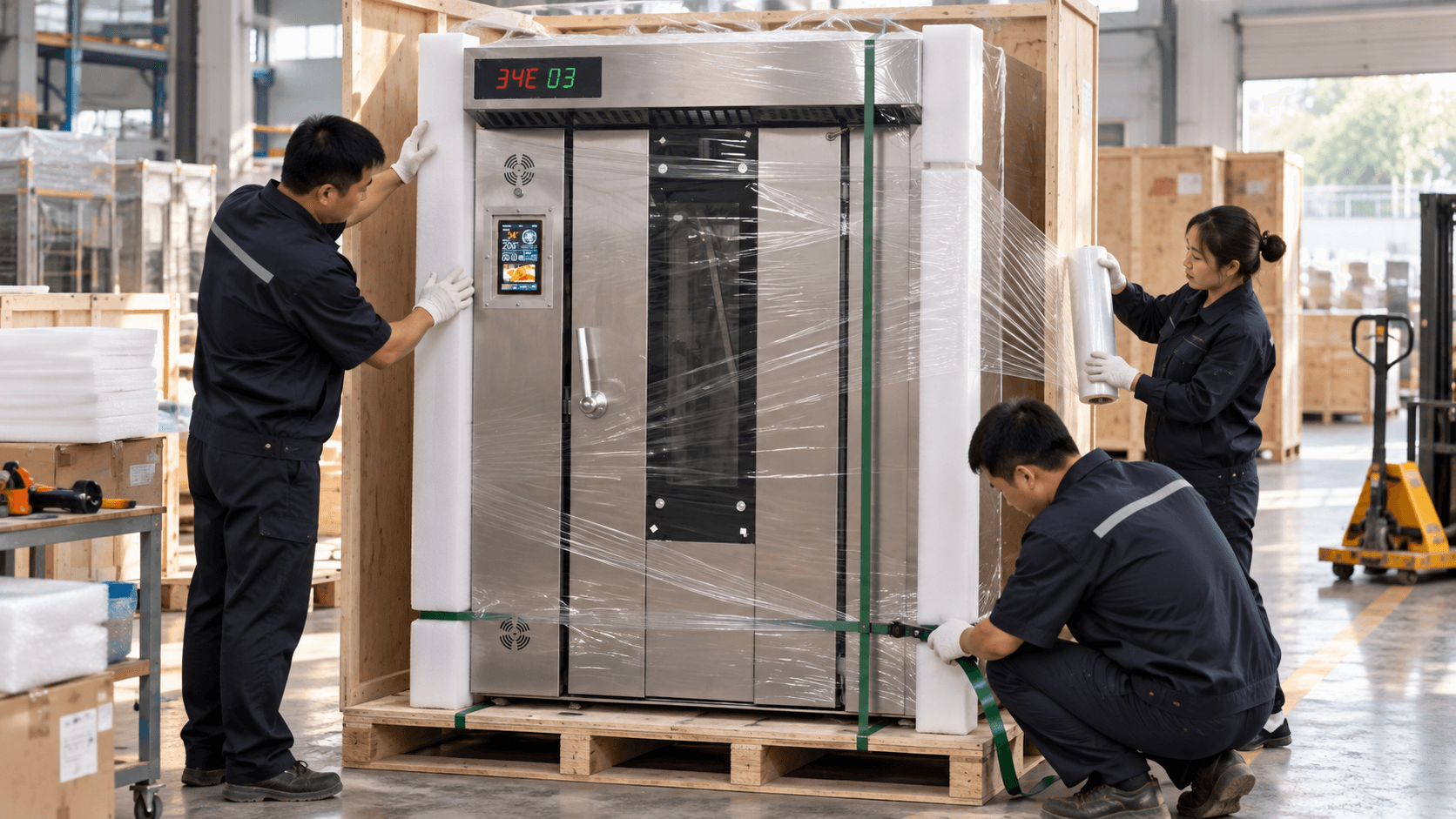
Bakery equipment spare parts should be planned before international shipment, when the exact models, controls and accessories are still easy to verify. A useful startup stock is not the largest box of generic components. It is a documented set matched to the purchased configuration, operating schedule, local technical skills and acceptable downtime.
This guide explains how buyers can create a maintenance and parts handover for rotary ovens, mixers, forming machines, proofers, cookie machines and other commercial bakery equipment without inventing service intervals or assuming every component can be changed by the operator.
Start with an equipment register
List every machine, model, configuration and serial or unit identifier when available. Record voltage, frequency, heating method, controller and included tools. Add the approved specification, final drawing, manual, factory-test record and nameplate photograph. Parts support becomes difficult when a request contains only a marketing category such as mixer or oven.
Assign one owner for the register and keep a controlled digital copy. If a component changes before shipment, update the parts list and affected documents. Store supplier part numbers alongside a plain description and installation location.
Separate consumables, wear parts and critical spares
Consumables are used routinely. Wear parts have a service life influenced by product, cleaning, loading and operating hours. Critical spares are components whose failure can stop production and whose replacement may take time to obtain. A single item can fall into different business categories depending on the bakery’s redundancy and delivery location.
Ask the supplier to classify recommendations for the exact model. Typical areas to discuss may include seals, belts, bearings, switches, sensors, heating or ignition components, contactors, relays, controller-related parts and machine-specific tools. This is not a universal list; confirm what actually exists in the purchased configuration.
Prioritize by downtime risk, not unit price
For each component, estimate failure consequence, expected sourcing time, storage needs, replacement skill and whether a temporary workaround is safe and approved. A low-cost sensor may deserve local stock if its absence stops the line. An expensive component may be lower priority when it has a long expected life and a locally available equivalent confirmed by the supplier.
Do not substitute safety, electrical or control parts without engineering review. Ratings, contact arrangement, materials and software compatibility matter. Record approved alternatives in advance where possible.
Link parts planning to the production bottleneck
Identify which machine controls the bakery’s accepted output. If one rotary oven handles every product, oven downtime has a different impact from the failure of an accessory with a backup. If two mixers can cover each other at reduced capacity, their critical-spares policy may differ.
Map the recovery plan for mixing, forming, proofing, baking, cooling and packing. Include the person authorized to stop the line, isolate the machine, diagnose the fault and contact support. Never keep production running through an unsafe condition to protect output.
Review Hongzhong bakery equipment by category
Request a preventive-maintenance handover
Ask for maintenance points, inspection tasks and available intervals for the selected machine. Intervals should come from the manufacturer’s documentation and be adjusted only through an approved maintenance process. Record the operating-hours or calendar basis and the conditions that trigger earlier inspection.
Create simple check sheets for routine cleaning, guards, doors, abnormal noise, leakage, fasteners, electrical enclosures and machine-specific points. Operators can report observations, but qualified work should remain with trained personnel. The U.S. Occupational Safety and Health Administration’s lockout/tagout standard illustrates the importance of controlling hazardous energy during servicing; applicable destination rules and site procedures govern the project. Review OSHA 29 CFR 1910.147
Plan tools and skills with the parts
A spare is not useful if the site cannot identify the fault, access the component or complete the work safely. Ask which diagnostic information the supplier needs, which tools are required and which replacements need a qualified electrician, gas technician or other specialist.
Record local service contacts and escalation routes before startup. Train more than one person to collect model information, clear photographs, controller messages and operating observations. Remote support becomes faster when the initial report is complete.
Store parts to protect their condition
Keep parts labeled and linked to the equipment register. Protect electronic components, seals, bearings and finished surfaces according to supplier instructions. Control moisture, dust, heat and physical damage as appropriate. Do not remove identification until the part is installed and documented.
Use minimum and reorder quantities for frequently used items. Record receipt date, issue date and installed location. Review slow-moving stock rather than automatically purchasing the same quantity every year.
Include spare parts in factory acceptance and packing checks
Before packing, compare the approved parts list with physical items. Photograph labels and quantities, and match packages to the packing list. Confirm that machine-specific tools, accessories and documentation are identified separately from general hardware.
At destination, inspect package condition and reconcile the list before parts are distributed. Keep any shortage or damage record with transport documents and photographs. International freight and replacement shipment costs should not be assumed free.
Create a clear support request
When a fault occurs, provide machine model and identifier, site voltage and configuration, the observed sequence, controller messages, photographs or video, recent work and the steps already taken. State whether the machine is safely isolated. Avoid changing multiple settings or parts before recording the original condition.
Ask the supplier to confirm the identified part, revision and replacement procedure. Keep the support case with the maintenance history so recurring problems can be reviewed.
Send your equipment list and destination for a model-specific spare-parts review
Budget parts over the equipment lifecycle
Separate startup stock, routine consumables, planned replacements and emergency freight. The lowest initial spare-parts budget may create expensive downtime, while a generic oversized kit ties up cash and may contain unusable items. Use production criticality and sourcing evidence.
Review the plan after commissioning and at a defined interval. Update quantities from actual consumption, operating hours and support history. Do not present a forecast as a guaranteed failure rate.
Frequently asked questions
Which bakery equipment spare parts should I order first?
Start with the exact model list, supplier recommendations, production bottlenecks, sourcing lead time and local replacement skills. There is no universal kit for every bakery.
Can I buy electrical parts locally?
Potentially, but confirm ratings, function, compatibility and approval before substitution. Safety and control components should not be selected only by appearance.
Should spare parts ship with the equipment?
Critical startup stock often benefits from the same shipment, provided items are approved, listed and packed correctly. Compare cost, urgency and storage needs.
What information is needed for a replacement request?
Provide machine model and identifier, configuration, photographs of the component and label, fault observations and relevant electrical or controller information.
Conclusion
A model-specific bakery equipment spare-parts plan connects documentation, production risk, safe maintenance, storage and support. Build it before shipment, verify it during packing and improve it from actual operating history.
Request a bakery equipment spare-parts and maintenance handover