Buying Guide · bakery intermediate proofer RFQ
Specify an Intermediate Proofer for a Bread Line
An intermediate proofer should give divided and rounded dough pieces the required rest before shaping without losing the line's pace. Specify the process time and both transfer points first; equipment capacity follows from those requirements.
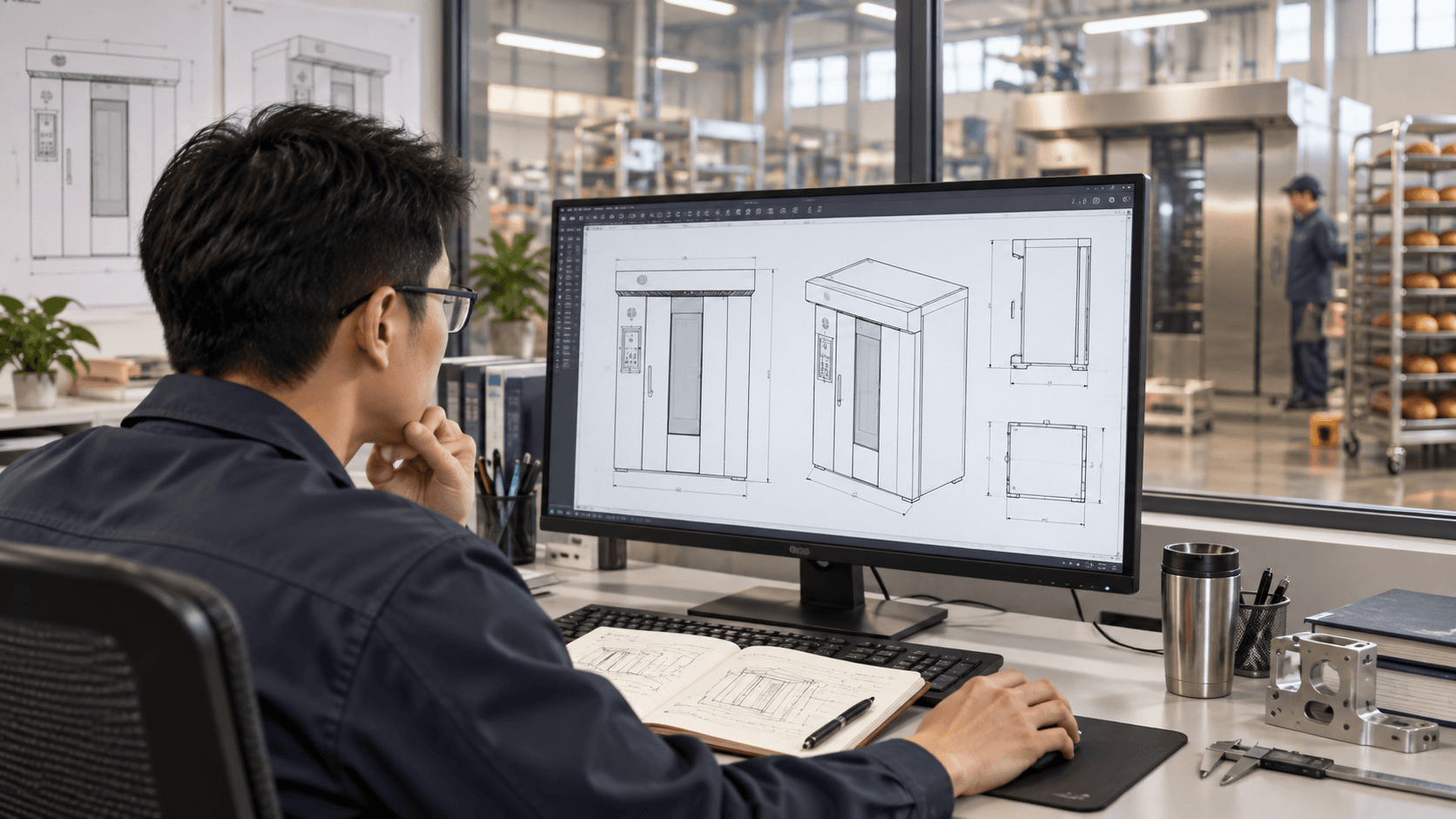
Describe the rest step, not just the machine
An intermediate proofer sits between make-up stages so dough can relax before the next shaping operation. This is different from final proofing before baking. Ask the production team which products need this step, the target rest window for each and the observable quality result after moulding.
AMF describes intermediate proofers and dough-ball conveyors as connected handling options. Its published examples show that rest time and transfer design vary by line. Use the buyer's own product trial to establish an acceptable window rather than copying another bakery's setting.
Turn line rate into a capacity brief
Give the supplier pieces per minute, lane count, piece-weight range and any planned stops or changeovers. State what happens when the downstream moulder pauses: whether feed stops, pieces are diverted or the proofer continues to move. A nominal residence time is not enough if a stop changes the time each piece spends inside.
Include the divider and rounder outlet positions and the moulder inlet position on one drawing. Check product spacing, transfer heights and the room available for inspection. Ask how the proposed equipment handles the smallest and largest pieces without collisions or excessive gaps.
Review atmosphere, access and hygiene
Ask what environmental conditions the offered design controls and what it simply protects from drafts or drying. Do not assume every intermediate proofer has active temperature or humidity control. List the cleaning method, accessible surfaces, crumb or flour collection points and the safe way to reach each area.
Specify who provides utilities and who validates any environmental settings. The machine supplier, installer and bakery quality team should agree how a representative product is checked after the rest stage and after final shaping.
Request an acceptance run across the product range
Run a small and large piece at the planned line rate. Record entry and exit spacing, actual rest time, product condition, transfer losses and behaviour after a controlled downstream stop. Keep the associated dough formula and batch conditions with the result.
The quotation should identify equipment boundaries, controls signals, cleaning access, installation responsibilities and any product assumptions that remain untested. This makes alternative offers easier to compare on working scope.
Frequently Asked Questions
Is intermediate proofing the same as final proofing?
No. It is a rest stage between make-up operations; final proofing prepares shaped dough for baking.
Can I size it from daily output alone?
No. Use pieces per minute, the required rest window and stop behaviour at the critical production rate.
Does every unit control humidity?
No. Ask the supplier to state exactly which conditions the proposed model controls.
Continue planning
Plan Your Bakery Equipment Project
Share your product range, divider rate, target rest window and line drawing. Ask Shanghai Hongzhong to define the intermediate-proofer handoffs before quotation.
Get a Quote →