Buying Guide · commercial bakery equipment for Africa
Commercial Bakery Equipment for Africa: Plan Utilities, Fuel and Support
 Written and reviewed by BelindaCEO of Shanghai Hongzhong · equipment selection and export project guidance
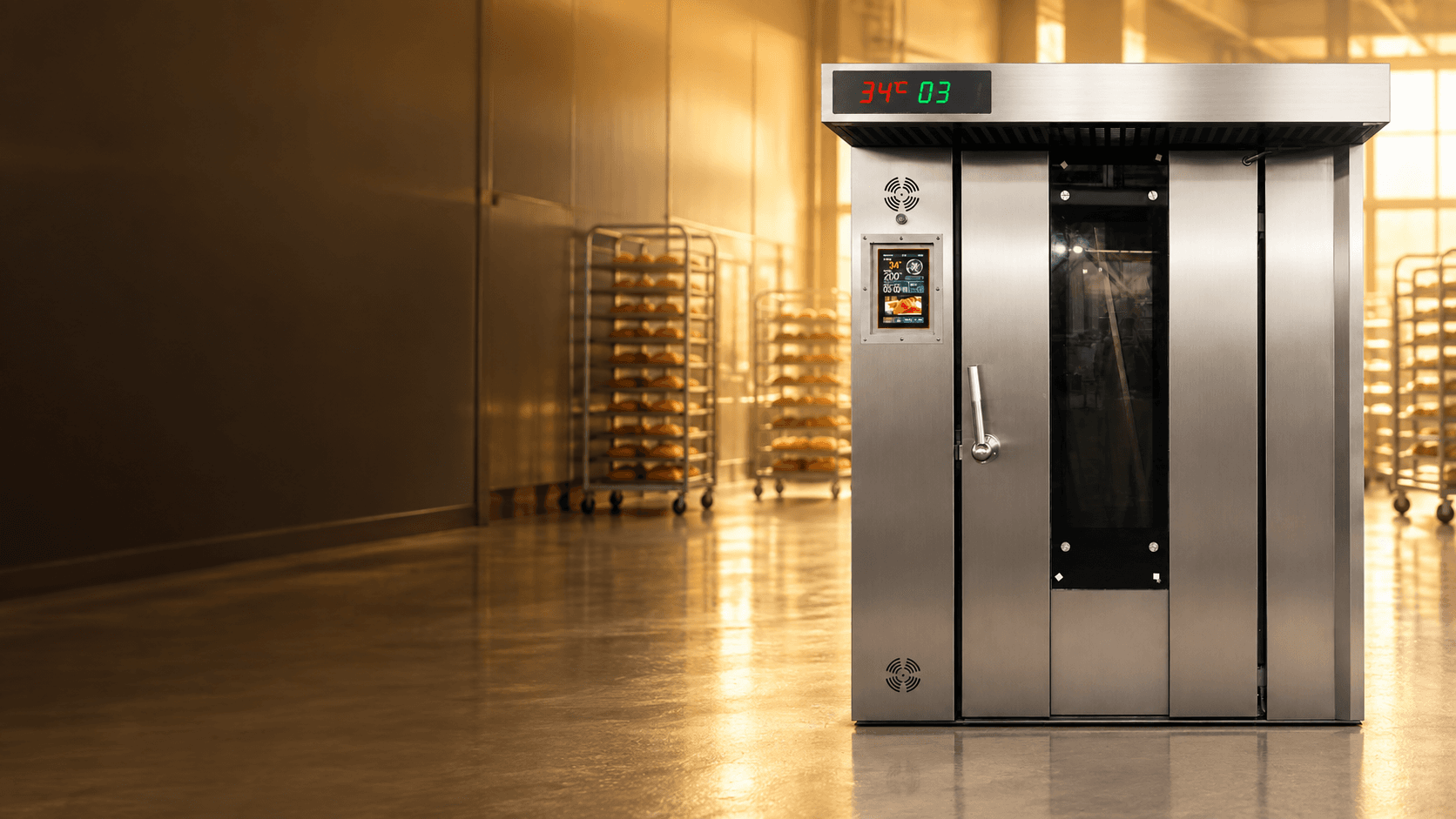
Commercial bakery equipment for Africa should be specified from the destination site, product plan and available utilities—not from a generic export package. Countries, cities and facilities differ, so a buyer should confirm voltage, frequency, fuel, water, ventilation, service skills and logistics for the actual project. A configuration that is practical in one bakery may require changes in another.
This guide is for bakery owners, distributors and project teams planning bread, buns, cakes, cookies or mixed commercial production. It explains the information that makes a quotation usable while avoiding unverified promises about output, energy cost or local compliance.
Start with products and the dispatch window
List every major product family, target piece weight, tray or pan arrangement, quantity and required completion time. Separate bread, pastry, cake and cookie products when they use different mixing, forming, proofing or baking programs. The busiest dispatch period determines the useful line rate more accurately than a daily total.
Record accepted output: products that meet the agreed weight, shape, proof, bake and packaging criteria. Catalog capacity is an initial reference. Actual output depends on recipe, loading, cycle time, changeovers and staffing. Ask suppliers to identify which values are published ratings, which are calculations and which have been verified in a representative trial.
Match the equipment sequence to the bakery
A bread project may require a dough mixer, divider, rounder or moulder, proofing equipment, rotary oven, cooling positions and possibly a slicer. Cake and cookie production may instead need a planetary mixer, depositor or cookie forming machine. Avoid buying an entire line before confirming which process fits each product.
Hongzhong’s dough mixer range starts at 60 L and its planetary mixer range starts at 50 L. Select the actual model from recipe batch size and the capacity of the next step. For forming equipment, send product photos, raw weight, dough characteristics and required shape. Do not assume an unconfirmed feature such as wire cutting is included.
Review Hongzhong commercial bakery equipment categories
Confirm voltage, frequency and phase for the exact site
Write the measured or officially specified site supply on the RFQ: voltage, frequency, phase and available load. Do not rely only on a country-level voltage table because individual sites, generators and distribution arrangements can differ. Ask for a configuration-specific electrical schedule before approving production.
Rated power is expressed in kW. Measured electricity consumption is expressed in kWh over a defined operating period. For a realistic operating estimate, separate preheat, production, waiting and shutdown, then divide measured energy by accepted output. Do not convert a nameplate kW figure directly into a guaranteed hourly bill.
Plan for generators and supply interruptions without guessing
If the bakery expects to use a generator or other backup source, give the equipment schedule to a qualified local electrical professional. Motor starting, controls and heating loads may affect generator selection. Ask the supplier to identify rated loads and any configuration requirements; local personnel should design protection, earthing, changeover and distribution.
Select the heating source from local availability
Rotary rack ovens may be quoted in electric, gas, diesel or confirmed wood-fired configurations. Compare the delivered energy source, storage, local service capability, exhaust requirements and operating process. The lowest unit fuel price does not automatically produce the lowest accepted-product cost.
For fuel comparisons, record fuel used during the same representative production window. Include preheat and routine waits. Hongzhong’s published wood-fired references list 15 kg/h for a 32-tray configuration and 20 kg/h for a 64-tray configuration, with electrical ratings of 3.2 kW and 4 kW respectively. Treat these as planning references and confirm the offered configuration and test method.
Compare rotary oven capacities and heating options
Check water, ventilation and the installation environment
Ask whether the proposed equipment requires water for steam or another function and obtain connection information for the selected configuration. Water quality and treatment needs are site-specific. Provide the supplier with relevant site information and have local specialists confirm treatment, drainage and food-safety controls.
Request equipment and connection drawings showing footprint, height, service clearance, loading direction and exhaust position. A qualified local contractor should review ventilation, flue, combustion air, heat rejection and fire-safety requirements. The equipment supplier’s drawing does not replace destination approvals.
Plan freight, unloading and access before shipment
Measure the route from container or truck unloading to the final position. Record gate, doorway, corridor, ceiling and turning dimensions, floor levels and any lifting restrictions. Compare those dimensions with the shipping package and equipment dimensions, not only the final operating footprint.
Clarify the delivery term and divide responsibilities for export packing, ocean freight, insurance, customs clearance, port charges, inland transport, unloading and installation. Sea freight is quoted separately unless the commercial offer clearly includes it. Ask a local customs broker to confirm import documentation and charges.
Create a practical spare-parts and support plan
Before ordering, request identification of routine wear parts, critical electrical and control components, sensors, seals and machine-specific tools. Ask which parts are included, which are recommended for startup stock and what information is needed for later ordering. Do not buy a large generic kit without matching it to the approved model and configuration.
Define the support route: who receives a fault report, what photos or readings are required, how parts are identified and which work must be performed by qualified local technicians. Store final drawings, manuals, model information and commissioning records where the bakery team can retrieve them.
Use a configuration-specific factory acceptance test
Verify model, voltage, frequency, heating method, controls, guards, included tools, trays, racks and accessories. Agree on the test product or representative material and record settings, elapsed time and accepted results. A generic product video does not prove the purchased configuration.
For a line, test handoffs as well as individual machines. Observe dough transfer, piece handling, tray loading and rack movement. Keep unresolved items in an action list before packing. Request nameplate, accessory and packing photographs for the delivered unit.
Send your product plan, city, site utilities and room drawing for a project review
Frequently asked questions
Can one standard equipment package serve every African country?
No. Confirm the actual site supply, fuel, regulations, logistics and service resources. The equipment list may be similar, but the configuration and project scope can differ.
What information should I send for a quotation?
Send products, target quantities and dispatch times, recipe batch information, tray or pan size, site voltage and frequency, fuel preference, room dimensions, destination and required functions.
Is installation included in the machine price?
Do not assume it is. Ask the quotation to separate equipment, packing, freight, unloading, local utility work, installation and commissioning responsibilities.
How should I compare operating cost?
Measure electricity in kWh and fuel quantity over the same representative production period, then divide by accepted output. Include preheat, waiting and normal changeovers.
Conclusion
A successful African bakery project starts with site-specific facts. When products, utilities, fuel, access, local work, spare parts and acceptance evidence are clear, commercial bakery equipment can be quoted and installed on a realistic scope.
Request a commercial bakery equipment quotation for your African project