Buying Guide · commercial bakery equipment automation
Commercial Bakery Equipment Automation: Choose the Right Level for Your Bakery
 Written and reviewed by BelindaCEO of Shanghai Hongzhong · equipment selection and export project guidance
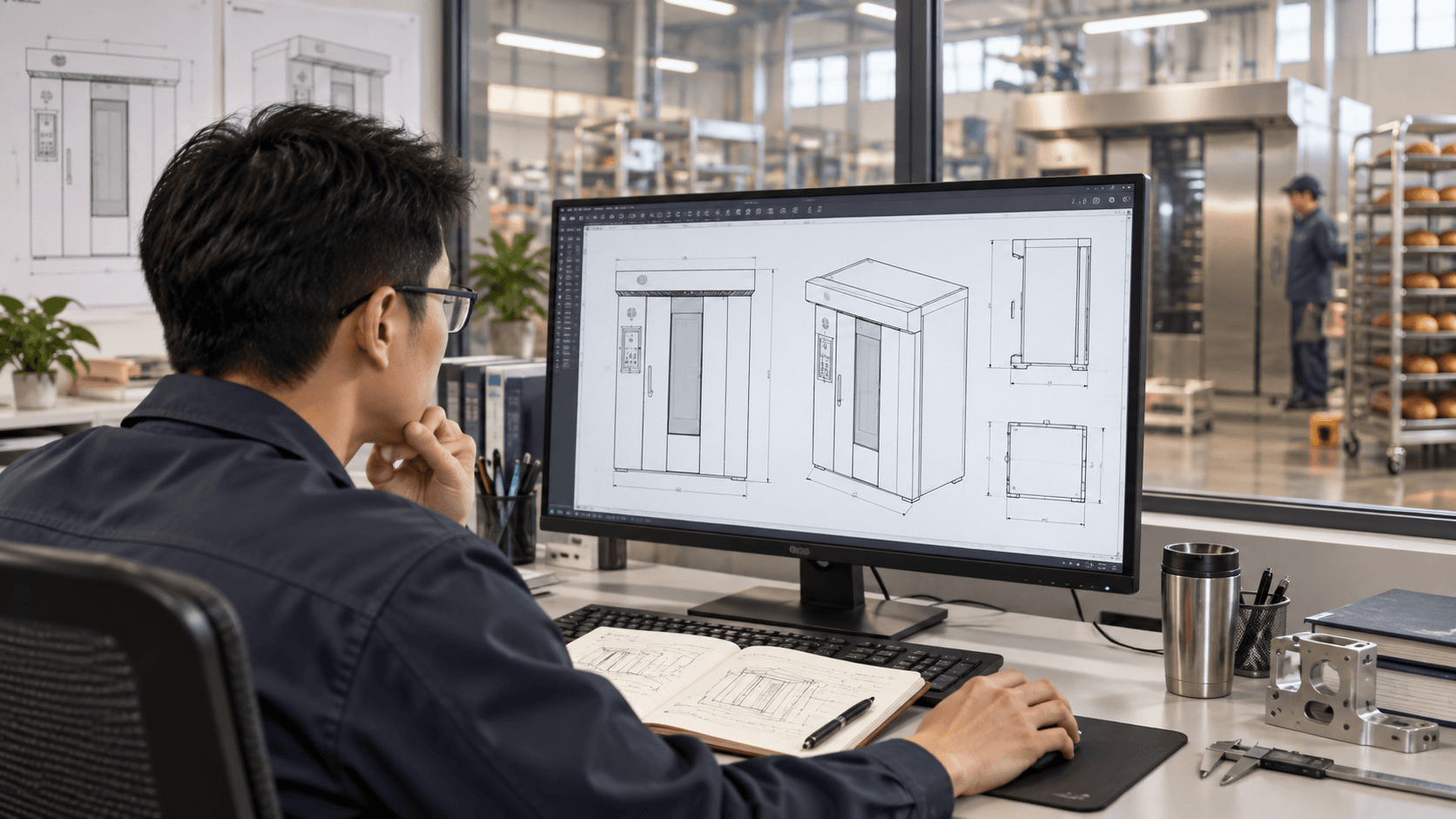
Commercial bakery equipment automation should be selected from the bakery’s products, accepted output, labor constraints and changeover pattern. It should not begin with a promise that the longest or fastest line is automatically the best investment. A small wholesale bakery, a regional bread plant and a mixed retail production center may all use automation, but they need different boundaries between machines, operators and quality checks.
Recent industry evidence supports paying attention to labor, flexibility and process improvement. The American Society of Baking reports increased use of automation and robotics in its workforce research, while the International Baking Industry Exposition describes buyers as automation-focused, space-conscious and quality-focused. These are industry-direction signals, not search-volume figures and not proof that every bakery should buy a fully automatic line. Source: American Society of Baking workforce study. Source: IBIE buyer priorities.
Begin with the business problem, not the automation label
Write down the constraint that the investment must solve. It may be inconsistent piece weight, too much manual lifting, an oven waiting for dough, slow packaging, excessive changeover time or a shortage of trained operators. A project that cannot state its current constraint cannot judge whether a proposed automatic function creates value.
Define success as accepted product delivered inside the required dispatch window. Accepted output excludes pieces that miss the agreed weight, shape, proof, bake or packaging standard. This distinction prevents a supplier’s headline machine rate from being treated as saleable production. Record the current baseline before requesting equipment: product, piece weight, batch size, good pieces per hour, rejects, operators, cleaning time, changeover time and planned stops.
Use the same definition when comparing alternatives. If one proposal measures raw divider discharge while another measures packed loaves, the numbers are not comparable. Ask every supplier to identify the measurement point and assumptions behind a capacity statement.
Understand three practical automation levels
Manual and assisted production
Manual production can still use commercial mixers, proofers and ovens while operators divide, shape, load or transfer products. It can suit varied products, early demand, frequent recipe changes and teams that value flexibility more than continuous rate. Its risks include operator variation, ergonomic load and dependence on individual skill.
Assisted equipment can improve a single demanding step without connecting the whole line. Examples include a dough divider, sheeter, moulder, depositor or slicer operated between manual transfers. The buyer should confirm how product enters and leaves the machine, where it waits and what happens when the next step stops.
Semi-automatic production
A semi-automatic bakery links selected operations but retains planned manual loading, inspection or transfer. This is often useful when the product range is broader than one continuous line can handle economically. It may also support phased growth because individual machines can be validated before more conveyors or automatic handling are added.
The value depends on handoffs. A fast divider does not help if operators cannot load trays at the required rhythm. A rack oven does not remove a proofing bottleneck. Draw every transfer and mark whether it is automatic, assisted or manual, including rejected product and recovery after a stop.
Highly automated or integrated production
An integrated bread production line can coordinate mixing, dividing, rounding, intermediate proofing, moulding, panning, final proofing, baking, cooling and packaging. It can reduce repeated handling and improve repeatability when demand and product design justify the line. It also increases the importance of controls integration, accumulation, sanitation access, fault recovery and trained technical support.
Do not treat “fully automatic” as a complete specification. Ask which stages, recipes, tooling changes, pan movements and quality checks are included. Confirm what remains manual, what is optional and what existing equipment must exchange signals with the new line.
Map products before selecting machines
Create a product matrix with dough type, piece weight, shape, toppings, inclusions, pan or tray, proofing method, bake profile and packed format. Mark the products that generate most volume, the products that generate most changeovers and any products that cannot share contact surfaces or tooling.
Choose representative products for trials. A soft sandwich loaf, small bun and high-hydration dough can behave differently during division, rounding and moulding. Cookies, cakes and laminated products need different equipment sequences. Do not approve a bread-line claim from a trial performed with an unrelated or easier material.
If future products are important, label them as future requirements and provide enough technical detail to evaluate them. Do not assume an untested attachment or program will support them. The quotation should separate confirmed capability, optional tooling and work that remains to be tested.
Calculate line capacity from the bottleneck
Convert the production plan into a common rate. For piece products, record pieces per minute at each stage. For batch equipment, calculate accepted units per batch and realistic batches per hour, including loading, unloading and routine waits. For rack ovens, tray count is only one input; the result also depends on products per tray, bake cycle, rack handling and changeovers.
| Planning input | Evidence to provide | Why it matters |
|---|---|---|
| Accepted output | Good units by product and dispatch period | Prevents gross rate from replacing saleable output |
| Peak rate | Highest sustained requirement, not daily average | Shows the critical operating window |
| Batch and cycle | Actual batch weight, loading and elapsed time | Connects batch machines to continuous stages |
| Changeovers | Products, tooling, cleaning and first accepted piece | Protects capacity in mixed production |
| Planned stops | Breaks, sanitation, inspection and maintenance | Makes shift output realistic |
Test whether upstream and downstream equipment can sustain the rate. A mixer may supply enough dough per hour but create large batches that wait too long. A divider may discharge faster than the proofer accepts. An oven may have adequate nominal capacity while cooling or packaging limits dispatch. The useful line rate is the lowest sustainable accepted rate after normal losses and planned work.
Measure labor by task and skill
Count people by station and by minute rather than reporting one total for the entire shift. Record ingredient preparation, loading, inspection, pan handling, rack movement, cleaning, changeover, maintenance and packing. Automation may remove repetitive handling but create needs for setup, monitoring, troubleshooting and data management.
Separate direct labor reduction from reassignment. If an operator moves from manual dividing to quality inspection, the project may improve control without reducing headcount. State the expected benefit honestly. Include training and safe work procedures in the implementation scope.
Review ergonomics with the actual package, dough tub, tray and rack masses. Do not claim an ergonomic improvement merely because a transfer is powered. Operators may still lift tooling, clean overhead areas or recover product during stops. Evaluate the complete task with qualified local safety personnel.
Check utilities and the building before approving automation
Request a configuration-specific schedule covering voltage, frequency, phase, rated power in kW, compressed air, water, drainage, steam or fuel where applicable. Measured electricity consumption is expressed in kWh over a defined operating period; rated kW is not a guaranteed energy bill. Ask local professionals to verify distribution, protection, earthing, ventilation and destination requirements.
Map the delivery and installation route. Include package dimensions, floor loading, doorway and ceiling limits, maintenance removal routes and sanitation clearances. Automated conveyors can make a layout less forgiving because a small position change affects multiple handoffs.
Plan network and control responsibilities if machines exchange recipes, production data or remote-support information. Identify who supplies cables, addresses, switches, access permissions and backups. Do not connect production controls to external services without the buyer’s cybersecurity and authorization process.
Design changeovers before choosing the line
List every format change and the work required: recipe selection, guide adjustment, tooling replacement, pan change, allergen cleaning and validation. Measure from the last accepted product of the previous run to the first accepted product of the next run. A mechanical adjustment time alone understates the production loss.
Ask which settings are stored, which must be measured and which parts are lifted or transported. Confirm storage for removed tooling and the method used to prevent parts from different models being mixed. A flexible line should demonstrate repeatable return to a previous product, not only movement to a new setting.
For allergen or identity-preserved production, obtain cleaning and verification requirements from the bakery’s food-safety team. Equipment selection can improve access and separation, but it does not create a validated sanitation program by itself.
Build a financial comparison without invented payback
Compare the complete project scope: equipment, tooling, controls integration, export packing, freight, insurance, import charges, unloading, utilities, installation, commissioning, training, initial spare parts and planned maintenance. International sea freight is not assumed free and should be quoted for the destination and agreed shipment term.
Estimate benefits from documented baselines. Possible categories include accepted output, labor reassignment, reduced giveaway, fewer rejects, faster changeover or additional production hours. Keep uncertain benefits separate from confirmed savings. Use scenarios rather than one precise return figure when demand, labor availability or product mix can change.
Consider the cost of complexity. A highly integrated line can produce more when operating, but a poorly planned stop may affect every connected stage. Review accumulation, manual bypass, diagnostic support, critical spares and the skills required to restore operation.
Use phased automation when evidence is limited
A phased plan can begin with the true bottleneck, preserve useful existing equipment and reserve interfaces for later expansion. For example, a bakery may first improve mixing and dividing, then add forming and pan handling after product trials establish stable settings. Another project may need oven, proofing and cooling capacity before faster make-up equipment creates value.
Phasing must be designed, not improvised. Confirm future conveyor heights, control signals, floor space and utility capacity. Ask whether the first-phase machine can operate independently and what modifications are required when the next phase arrives.
Review Hongzhong commercial bakery equipment categories
Write an RFQ that makes proposals comparable
Send products, recipes at the level needed for equipment selection, piece-weight ranges, accepted output, peak window, shifts, tray or pan drawings, site utilities, room layout and destination. Identify the required automation boundary and any existing machines. Ask suppliers to return a line drawing, machine list, capacity basis, utility schedule, included tooling, exclusions and responsibility matrix.
Request evidence for every critical handoff. This may include a representative product trial, video of the offered mechanism, sample output, drawings or reference documentation. Evidence from a different model can explain a principle but should not be presented as proof of the ordered configuration.
Send your product matrix and target output for an automation-scope review
Plan factory acceptance around production risk
Verify model, configuration, voltage, controls, guards, tooling and accessories before the functional test. Run representative products at agreed conditions. Record accepted output, rejects, changeover steps, stop-and-restart behavior and the condition of product at every transfer.
Test interfaces as well as individual machines. Confirm signals, accumulation and recovery when a downstream stage pauses. Keep unresolved items in a signed action list. Photograph nameplates, accessories and packing, and retain the approved software or recipe backup where supplied.
Define production data before adding software
Automation projects often include counters, recipe storage, alarms or production dashboards. Decide which decisions the data must support before specifying screens. Useful records may include accepted pieces, rejects by reason, batch start and finish, changeover duration, downtime category, recipe revision and operator acknowledgement. A large number of tags has little value when names, units and ownership are unclear.
Define the source of each value. A sensor count may show pieces passing one point, while the packing record shows saleable units. Keep raw counts, accepted output and scrap separate. Agree how rework and product diverted during a stop are treated. If operators enter data manually, design a short, consistent process and audit it against physical production.
Set access levels for recipes and configuration changes. Record who may edit a set point, approve a recipe and restore a backup. An automatic line should not depend on one person’s private notes. Include version control and a method for returning to the last approved setup after service work.
Ask how data is exported and who owns it. Confirm file formats, retention, time synchronization and the behavior when a network connection is unavailable. Remote access should be disabled or controlled according to the buyer’s authorization process. A supplier may provide diagnostic support, but the bakery should decide when external access is permitted and what evidence is retained.
Adapt the implementation plan to the destination
For a United States project, identify local electrical, workplace, sanitation, fuel and building review early and confirm which authority or qualified professional approves each area. Do not assume a machine description or overseas component document completes the site approval. Reserve time for local review, installation work and operator training.
For an African project, avoid treating the region as one utility or service environment. Confirm the actual country, city and facility supply. Voltage stability, generator use, fuel availability, water, internet access, customs routes and technician capability can differ between sites. Design the support and spare-parts plan from those facts.
Where skilled maintenance coverage is limited, favor clear diagnostics, accessible routine service points, documented settings and parts that can be identified accurately. This does not mean choosing the simplest machine in every case. It means matching complexity to the people, tools and response route that will be available after commissioning.
Plan training by role: operator, sanitation, supervisor, maintenance and production planning. Include normal startup, product change, controlled stop, fault reporting, cleaning and escalation. Repeat critical training after the team has operated the line, because initial handover occurs before every real production condition has been experienced.
Frequently asked questions
Does automation always reduce labor cost?
No. It can change tasks, improve consistency or raise output without reducing total headcount. Compare current and proposed tasks, skills and shift coverage.
When should a bakery choose a fully automatic line?
When stable demand, product definition, utilities, technical support and financial evidence justify integration. A mixed or changing product portfolio may benefit from selective automation.
Can existing machines be included?
Possibly. Provide model, drawings, operating height, capacity, controls and condition. Confirm mechanical, electrical and process interfaces in writing.
How should capacity be verified?
Use accepted output at a defined measurement point under representative product, staffing and changeover conditions. Do not rely only on maximum machine speed.
What is the first document to prepare?
Create a product and production matrix, then map the current flow and bottleneck. That evidence supports a useful RFQ.
Conclusion
Commercial bakery equipment automation works when it solves a measured production problem and fits the bakery’s products, people, building and support capability. Define accepted output, validate handoffs and compare the complete project scope. The appropriate level may be assisted, semi-automatic, integrated or phased.