Buying Guide · commercial bakery equipment procurement timeline
Commercial Bakery Equipment Procurement Timeline: From RFQ to Production
 Written and reviewed by BelindaCEO of Shanghai Hongzhong · equipment selection and export project guidance
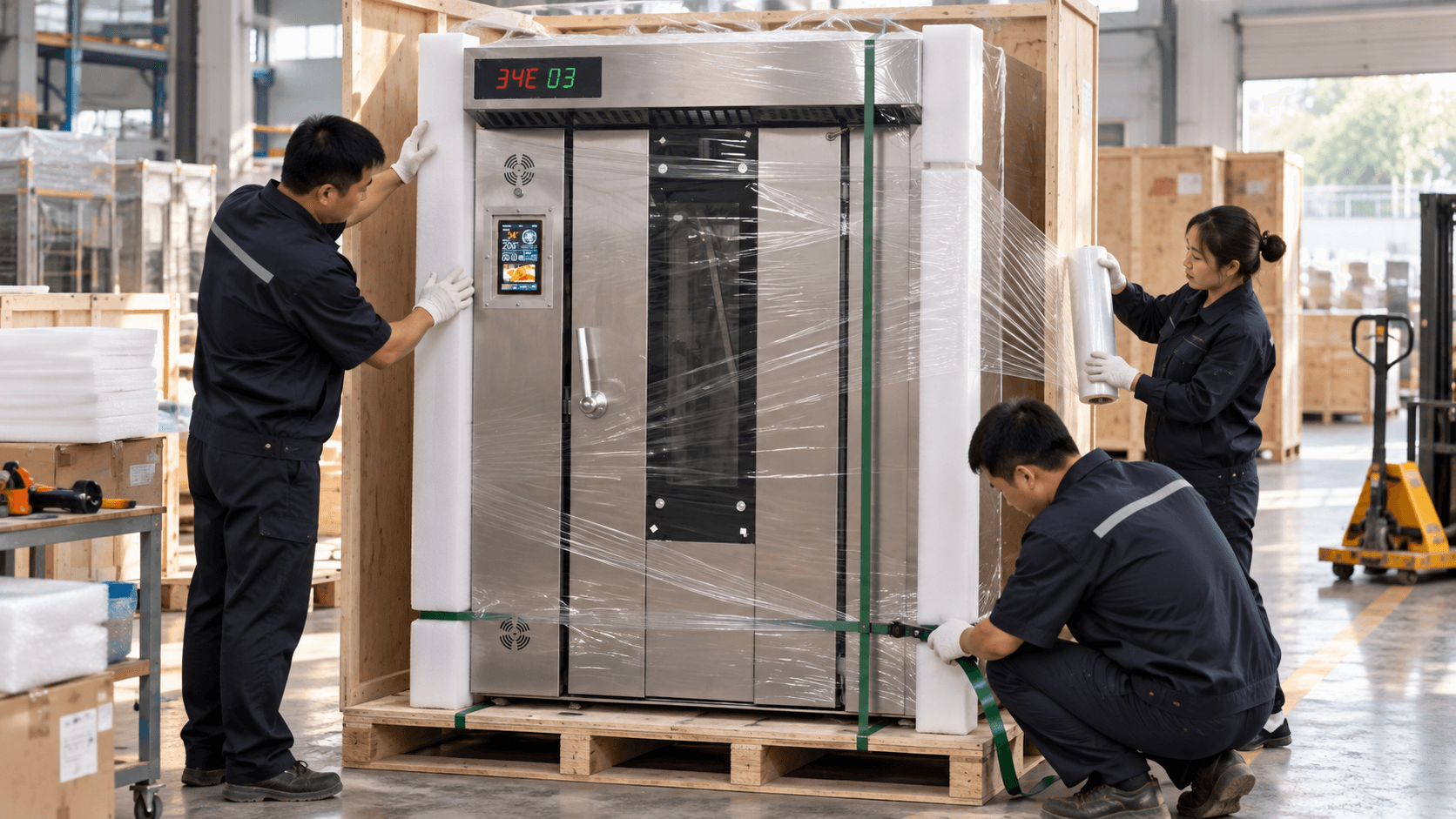
A commercial bakery equipment procurement timeline should start before a supplier quotes and continue until the bakery has completed a documented production handover. The equipment manufacturing period is only one part. Product definition, layout, utility review, trials, drawing approval, factory acceptance, export packing, freight, customs, installation and commissioning can each control the opening date.
This guide helps overseas bakery owners and project teams build a realistic schedule without inventing supplier lead times. Every duration must be confirmed for the selected models, destination and current production plan. Recent industry investment coverage emphasizes maintenance, systems improvement, quality and flexibility; that makes disciplined project planning more useful than rushing an incomplete order. Source: BEMA capital spending outlook.
Set the required production date and work backward
Define the date when accepted product must be available, not merely the date equipment should arrive. Add time for installation, utilities, operator training, recipe setup, trial production and correction of open items. If a customer launch or lease date drives the project, record that dependency separately.
Create milestones with owners and evidence: approved specification, approved layout, trial acceptance, production release, FAT, packing release, shipment, customs clearance, mechanical completion, commissioning and production acceptance. A date without an owner and completion document is only an assumption.
Prepare the RFQ before requesting prices
Send products, piece weights, batch sizes, trays or pans, accepted output, peak dispatch window, shifts, utilities, room plan, destination and required functions. State existing equipment and the proposed automation boundary. Hongzhong dough mixers start at 60 L and planetary mixers at 50 L; select the model from recipe batch and downstream capacity rather than using a smaller unconfirmed range.
For rotary ovens, identify tray capacity, tray size, rack arrangement, heating source, voltage, frequency and steam requirements. For forming machines, provide product photographs and dough characteristics. Do not assume an unconfirmed function such as wire cutting.
Compare quotations on equal scope
Require a model list, specification, capacity basis, utilities, included accessories, exclusions, packing, delivery rule, installation responsibilities and support scope. Separate equipment price from freight, insurance, customs, unloading and local work. International sea freight is not free by default.
Resolve technical differences before final price comparison. One supplier may include racks, trays or commissioning while another does not. Record optional items and their effect on operation.
Freeze the configuration before production
Approve model, voltage, frequency, phase, fuel, controls, tray format, tooling and accessories. Attach a revision-controlled specification to the order. A verbal promise or catalogue family page should not replace the final configuration.
Establish a change process. Each change should show technical, price and schedule effects and whether drawings or tests must be repeated. Late changes can affect several machines and local contractors.
Approve the layout and site utility schedule
Review footprint, operating zones, service clearances, rack routes, transfer heights and utility connection points. Measure the unloading route from truck or container to final position. Compare doorways, turns and ceiling limits with shipping packages, not only installed dimensions.
Qualified local professionals should review electrical distribution, fuel, ventilation, water, drainage, floor and fire-safety requirements. The manufacturer supplies configuration data; destination professionals approve local work.
Complete product trials before critical tooling is fixed
Agree representative recipes, input condition, settings, measurements and acceptance criteria. Record accepted pieces and rejects. A sample from an unrelated product or different model is reference material, not proof of the ordered machine.
Keep untested products on an open list. If a trial changes tooling, program or layout, update the quotation and drawings before production release.
Track manufacturing through evidence milestones
Ask for milestone evidence appropriate to the project: approved drawings, major assembly confirmation, control completion and readiness for FAT. Avoid daily requests that add administration without showing risk. Focus on items that would be costly to correct after shipment.
Maintain one action register with issue, owner, target date, evidence and status. Commercial, technical and logistics teams should work from the same revision.
Prepare factory acceptance before the machine is ready
Write the FAT during specification approval. Verify model, nameplate, configuration, controls, guards, tooling and accessories. Run agreed products and observe handoffs, stop behavior and restart. Record settings and results.
Open items need an owner and closure method. Do not release packing because a demonstration looked satisfactory while configuration or documentation remains unresolved.
Plan export packing and logistics as a separate workstream
Confirm package count, dimensions, mass, moisture protection, lifting points and packing list. Identify parts removed for shipment. Photograph the actual unit, nameplate, accessories and packing.
Agree the Incoterms rule and named place, then assign export transport, ocean freight, insurance, destination charges, customs, inland delivery and unloading. Ask a destination broker to verify current import requirements. Transit estimates do not include every port or customs delay.
Make the site ready before arrival
Complete approved utilities, access and floor preparation against the latest drawing. Confirm lifting equipment and trained operators for unloading. Store delivered packages safely and reconcile them with the packing list before assembly.
Do not schedule specialist commissioning while basic utilities or ventilation remain incomplete. Use a readiness checklist and photographs where helpful.
Commission the configuration, then the product
First verify installation, utilities, controls, guards, door operation, rotation or movement and agreed functions. Then run representative production. Rated power is stated in kW; electricity used during a measured operating period is kWh.
Record operator training, settings, product results and unresolved observations. A short startup does not prove annual capacity or every recipe. Establish the follow-up support route.
Review Hongzhong commercial bakery equipment categories
Protect the schedule with decision gates
| Gate | Evidence | Do not proceed when |
|---|---|---|
| RFQ release | Product and site brief | Output or utilities are undefined |
| Production release | Approved specification and drawings | Configuration remains disputed |
| Packing release | FAT and action closure | Critical test items remain open |
| Shipment release | Documents and destination plan | Consignee or import data is incomplete |
| Commissioning | Site readiness approval | Utilities or safety work is unfinished |
Send your target date, product plan and site drawing for a procurement-schedule review
Coordinate documents with payment milestones
Link each commercial milestone to objective project evidence agreed in the contract. A deposit may release engineering, a drawing approval may release production, and a passed FAT may support packing or shipment steps. The exact arrangement requires appropriate commercial and legal review, but technical evidence should remain identifiable. Do not allow a payment request to become the first notice that a drawing, option or accessory has changed.
Keep invoice descriptions, model names, quantities and contracting entities consistent with the final order. Correct discrepancies before export documents are prepared. A minor naming difference can create avoidable questions during banking, customs or receiving, particularly when several machines and accessory crates are shipped together.
Plan the information flow between teams
Name one technical and one commercial contact on each side, then copy decisions into a controlled register. Sales messages, engineering drawings, product-trial results and logistics instructions should not remain in separate private conversations. Record the current revision and approval date for every critical file.
Give local contractors the final equipment schedule early enough to quote their work. They may need load data, connection sizes, exhaust points, drainage, floor information and access dimensions. Ask them to identify missing information before construction begins. Where an answer remains conditional, state the assumption and the date by which it must be resolved.
Use schedule ranges instead of false precision
For early planning, use a range for activities affected by design, testing, international transport or approval. Separate working time from waiting time. Five days of technical work may span several calendar weeks when the buyer, supplier and local contractor must approve successive steps.
Identify the critical path and available float. A product trial can delay tooling approval; tooling can delay FAT; FAT can delay final packing dimensions; those dimensions may affect shipment booking. Other activities, such as local floor preparation, can proceed in parallel once the correct drawing is approved.
Prepare a delay-response plan
For each critical milestone, define the consequence of a late decision and the next safe action. A delayed ingredient sample may require a documented substitute trial, not an unverified assumption. A delayed local utility review may require holding production release if connection data could change the machine.
Update the schedule with evidence rather than optimism. Communicate a new range, affected dependencies and owner. Do not hide delay by removing commissioning or shortening tests that protect the buyer.
Close the project with an operational handover
The final milestone is not container delivery. Reconcile equipment, accessories, spare parts and documents; close installation and FAT actions; train the responsible roles; record approved settings; and establish the support route. Assign ownership for maintenance records and future parts requests.
Review planned versus actual dates and causes without turning estimates into supplier performance claims. The lessons should improve the next project: which data arrived late, which drawing required rework, which authority needed earlier involvement and which trial evidence prevented a larger problem.
Frequently asked questions
How long does a bakery equipment project take?
It depends on configuration, trials, production, shipping, customs and site readiness. Obtain current durations for each milestone instead of using one universal lead time.
When should the layout be approved?
Before production release, after the model and process flow are clear. Reapprove it when a change affects utilities or interfaces.
Can shipping be booked before FAT?
Planning can begin, but final commitments should reflect test status, packing dimensions, documents and the agreed commercial arrangement.
What causes the most avoidable delay?
Incomplete product data, late configuration changes, unprepared utilities and unclear responsibility frequently create avoidable rework.
Is commissioning the same as installation?
No. Installation positions and connects equipment; commissioning verifies the installed configuration and prepares it for controlled operation.
Use a weekly project-control review
Hold a short review around the milestone register, not a general conversation. Check decisions due, technical questions, drawing revisions, trial evidence, local works, logistics data and payment prerequisites. Each open item should have one owner, one due date and a clear closure document. Separate information that is late from information that has been received but not approved.
Review risks to the production date and the next irreversible decision. A delayed color choice is different from an unresolved voltage or rack interface. Give priority to items that affect manufacturing, building work, import documents or safety. Record decisions immediately so the engineering and commercial teams do not act on different answers.
Include the buyer’s local electrician, ventilation contractor, customs broker or installer when their work is on the critical path. They do not need every factory update, but they need approved data early and a channel for questions. Confirm whether a response changes the specification or only explains it.
At the end of the review, update the baseline schedule only when scope or evidence justifies it. Preserve the previous date and reason. This creates a useful history for delay analysis and prevents silent movement of milestones.
Conclusion
A reliable commercial bakery equipment procurement timeline connects decisions to evidence. Define products and site conditions, freeze the configuration, approve drawings, test the ordered equipment and prepare logistics and utilities in parallel. The result is a defensible schedule rather than an optimistic delivery date.