Buying Guide · commercial bread slicer buying guide
How to Choose a Commercial Bread Slicer for Your Loaves and Packaging Line
Introduction
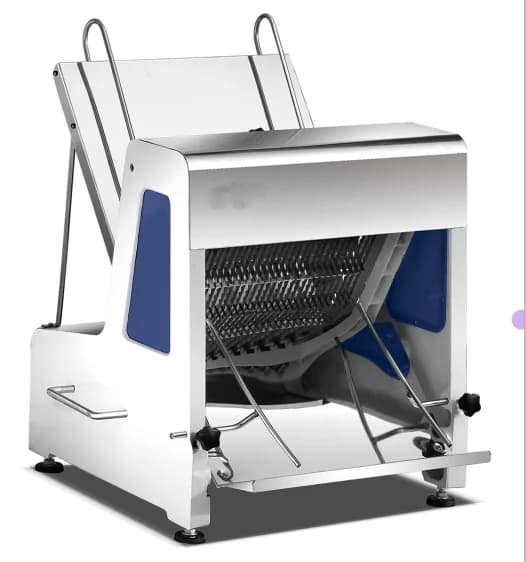
Choose a commercial bread slicer by matching the actual loaf, required slice thickness, saleable output and packaging routine to the proposed machine. A headline loaves-per-hour figure is not enough. Loaf dimensions, crust, crumb condition, product temperature and operator handling can all affect whether the slices remain acceptable after cutting and bagging.
For a bakery importing equipment, the purchase also involves installation access, electrical configuration, spare blades, documentation and training. A machine that cuts a demonstration loaf successfully may still be a poor fit for your normal product mix or the way your team loads bags.
This guide sets out a practical buying method for bakeries, distributors and production managers. It separates product compatibility from mechanical speed and explains how to organise a trial that supports an order. Numerical examples are planning illustrations, not measured performance or guarantees for any Hongzhong slicer.
1. Define the loaf before selecting the machine
Measure the product that will actually be sliced
Record the maximum and normal loaf length, width and height at the slicing stage. Measure the baked product after the normal cooling and handling process, rather than using only the pan dimensions or a dough-piece weight.
Include variation across the range. A tall sandwich loaf, a wide round loaf and a narrow specialty bread can place different demands on guides, loading clearance and discharge handling. A machine should be assessed against the difficult normal product, not just the easiest loaf available for a demonstration.
Provide photographs from more than one angle and identify the direction in which the loaf will enter the slicer. If the product is de-lidded, depanned or manually transferred before cutting, describe those operations as well.
Describe crust and crumb behaviour
Explain whether the loaf compresses easily, has a firm crust, sheds seeds or contains inclusions that can affect cutting. Product names alone are not enough: two breads sold under the same name may behave differently because their recipes and baking conditions differ.
The American Society of Baking identifies several product and operating factors that influence slicing quality, including product temperature and settings suited to the bread variety. Use that as a reason to trial your own product, not as a universal temperature prescription. Source: American Society of Baking, Bread Slicing.
2. Confirm what slice thickness means commercially
Ask whether slice spacing is fixed, adjustable or changed by a specific tooling arrangement. Do not assume that every commercial slicer can change thickness using a simple control setting. The exact mechanism and permitted settings belong in the quotation.
Consider the customer's portion requirement, the desired pack presentation and the size of the loaf. A thinner slice can change handling and breakage behaviour. A thicker slice changes the number of portions available from a loaf and may affect the packaging format.
Check the complete sliced loaf
Evaluate the end pieces, the usable centre slices and the stability of the loaf after cutting. The count of saleable slices is not always the loaf's external length divided by the nominal spacing because end geometry and trimming decisions can matter.
If portion count is part of a commercial agreement, define how end pieces are treated. Ask for actual sample packs rather than inferring the result solely from a blade-spacing number.
Avoid assuming that uniform thickness guarantees uniform weight
Two equally thick slices can have different weights if the loaf cross-section or crumb distribution changes along its length. Thickness control and portion-weight control are related purchasing questions, but they are not the same specification.
Where weight is critical, establish a sampling method for the finished product. Identify which variation comes from the loaf and which is associated with cutting. Do not ask a standard bread slicer to deliver a weight guarantee that has not been reviewed for the product and process.
3. Compare loading and cutting arrangements
Manual and assisted handling
A manually loaded slicer can fit a bakery where operators already handle individual loaves before bagging. A more automated arrangement may suit a regular high-volume flow, but it requires a compatible infeed and discharge process.
Ask what the operator does during a normal cycle. Include loaf positioning, initiating the approved cycle, removing sliced bread and preparing the next loaf. A video that shows only the cutting movement leaves out much of the work that determines practical output.
Continuous flow and integration
For a line-connected machine, define the product orientation, transfer height, spacing and responsibilities at each interface. Confirm how the system behaves when the packaging operation pauses or an incoming loaf is not correctly positioned.
Do not assume that matching conveyor widths means two machines integrate successfully. The complete handoff includes timing, product support, controls where specified and safe access for operators and maintenance.
| Buying requirement | What to confirm | Evidence to request |
|---|---|---|
| Several loaf sizes | Accepted dimension range and adjustment method | Trial with normal and difficult loaves |
| Different slice thicknesses | Available spacing and change method | Supplied tooling list and sample slices |
| Soft or delicate bread | Product support and handling method | Sliced and bagged samples |
| Line integration | Infeed, discharge and stop behaviour | Interface drawing and operating demonstration |
| Frequent product changes | Adjustment and cleaning sequence | Complete timed changeover |
4. Calculate practical output across slicing and bagging
Begin with the number of acceptable packed loaves required during the actual working period. If slicing feeds bagging directly, the slower of the two operations can limit the usable output.
For a hypothetical example, assume an operator completes one slicing-and-removal cycle in 15 seconds. The arithmetic is 60 ÷ 15 = four loaves per minute, or 240 per hour before additional delays. This does not rate any machine; it simply shows how the complete cycle affects a schedule.
If a separate bagging process accepts only three loaves per minute, its theoretical rate is 180 per hour. Increasing the slicer's cutting speed does not by itself increase the packed output beyond that constraint.
Include stops and product changes
Record time for replenishing loaves, changing products, removing crumbs under the approved procedure and handling rejected packs. Avoid using an unexplained efficiency percentage as though it were an industry constant.
Build a schedule using your actual staffing and observations. If the normal production day includes several bread varieties, test at least one representative changeover instead of timing a long run of identical demonstration loaves only.
Separate gross output from acceptable output
Report the number of loaves presented, successfully sliced, rejected after slicing and accepted after bagging. Record why a loaf failed. A reject caused by insufficient cooling needs a different response from one caused by unsuitable guides or cutting setup.
The purchasing objective is a repeatable route to acceptable packs. A maximum mechanical speed can inform that review, but it is not a substitute for it.
Need help matching a slicer to your bread? Send your requirements with loaf dimensions, product photographs, target thickness and packed output. Include how you intend to load and bag the bread so the review covers the complete operation.
5. Make cooling part of the application review
Do not choose a universal waiting time
Bread condition changes after baking, and the suitable slicing point depends on the product and process. Do not assume that a fixed number of minutes works for every loaf, room or production volume.
Describe your current cooling method, the time available and any measurements used by your team. If the bakery is being designed from scratch, agree how the trial will represent the intended cooling stage. A supplier should know whether it is evaluating freshly baked bread or bread prepared under a different schedule.
Inspect what happens during cutting
Look for compression, tearing, uneven separation, excessive crumbs and distortion of the loaf. Identify whether the issue appears throughout the loaf or at particular positions. Keep the observation tied to the product condition and machine settings used.
Do not resolve a difficult demonstration by presenting a substantially different loaf without documenting the change. That may show that the machine operates, but it does not confirm compatibility with the product you planned to sell.
Connect cooling space to production flow
A bakery can own an adequate slicer and still struggle because cooling racks or transfer space are insufficient. Map where bread waits before cutting and how staff identify which batches are ready.
For a broader discussion of the upstream flow, see the existing bakery cooling capacity guide. The present article concentrates on slicer selection and sample acceptance rather than sizing an entire cooling system.
6. Organise a useful factory trial
Prepare the product and acceptance brief
Specify loaf dimensions, variety, intended slice thickness, product condition, required pack format and target operating rate. Identify the products that are commercially important and those likely to be difficult.
Agree how trial loaves will be prepared. If local ingredients, pans or cooling conditions differ, document them. A trial with substitute bread can provide useful information, but its limitations must remain attached to the result.
Observe the full normal cycle
Include loading, cutting, removal and bagging or discharge. Test the normal product change and the approved response to an interruption. Keep all guards and protective functions in their normal operating configuration.
Never ask an operator to place hands near moving blades to improve a demonstration or clear product faster. Safe operation must follow the actual machine instructions. Cleaning, jam clearing and blade work require the manufacturer's procedures and appropriately trained personnel.
Review a sample record rather than one attractive loaf
Agree a sample plan covering the important products and operating stages. Record thickness observations, visible defects, pack appearance, cycle time and reject reasons. If a measurement method has limitations, state them.
Photograph the whole sliced loaf and the finished pack. Retain accepted samples or a clearly identified photographic record where practical. If adjustments are made, identify the revised settings so production and purchasing teams know what was actually accepted.
7. Review blades, cleaning and service arrangements
Confirm the exact blade supply
Ask which blades are supplied, how replacements are identified and which approved specification must be used. The supplier should explain the service procedure and the scope of any specialist work rather than treating blades as generic consumables.
Oliver's manufacturer information for its Variety Bread Slicer includes model-specific blade-maintenance guidance. That illustrates why buyers should obtain the instructions for their own machine; an interval published for another model should not be copied into a Hongzhong maintenance plan. Source: Oliver Variety Bread Slicer.
Inspect cleaning access
Ask how crumbs are collected and which surfaces can be accessed under the approved isolation procedure. Confirm the permitted cleaning method around drives, controls and electrical parts. A stainless exterior does not prove that the whole machine is suitable for hose cleaning.
Check whether the cleaning procedure fits the bakery's staffing and product-change schedule. If bread varieties introduce different allergens, the bakery needs an appropriate cleaning and verification plan; a visually clean machine alone does not establish allergen removal.
Keep service responsibility clear
Confirm who handles installation, training, fault diagnosis and replacement-part ordering. Request manuals and parts identification in a form your team can use. Avoid assuming a particular local service network or response time without a documented commitment.
8. Prepare the site and compare the commercial scope
Give operators an acceptance reference
Keep a clearly identified example of the acceptable sliced and packed product with the trial record. Record the loaf condition, thickness arrangement and handling sequence associated with that example. This helps distinguish a normal product difference from a deterioration that needs investigation after installation.
Where two shifts share the equipment, agree how settings and observations are handed over. A machine may be mechanically unchanged while loaf temperature, loading direction or packaging practice differs between teams. The service conversation is more productive when these conditions are recorded. Do not describe an unexplained change as a blade fault before the product and operating context have been checked under the approved procedure.
Specify voltage, phase and frequency for the installation site. Rated power in kW is a configuration figure, not a guaranteed electricity-consumption rate per loaf. Actual kWh use depends on operation and should be measured if it materially affects the comparison.
Check the delivery route, installed footprint and space needed for loading, unloading, cleaning and servicing. A bench-mounted unit and a floor-standing machine can have different support requirements. Ask for actual installation information instead of guessing from a catalogue photograph.
Inspect the shipment against the order
Before shipment inspection, verify machine identity, electrical configuration, slice arrangement, accessories, spare blades where ordered and documentation. Identify loose items on the packing list and photograph the equipment before crating.
Agree packing, transport, insurance, unloading and installation responsibilities. Sea freight is not automatically included or free. Compare quotations on the same delivery basis so an apparently lower price is not simply omitting part of the project.
The Hongzhong equipment catalogue provides the starting point for enquiries about the current range. Confirm the chosen slicer's loaf limits, slice arrangement and handling requirements in the final quotation; this guide does not assign unverified capabilities to a listed machine.
FAQ
Can one slicer handle every bread variety?
Not automatically. Dimensions, crust, crumb structure, inclusions and product condition influence compatibility. Identify the difficult normal products and request trials with them. A successful demonstration using a basic sandwich loaf does not establish performance across the entire menu.
Is adjustable slice thickness always available?
No. The adjustment method depends on the machine. Ask whether thickness is fixed, selectable or changed through a specific blade or tooling arrangement, and confirm what is included. Obtain sample slices at the settings you plan to use.
How long should bread cool before slicing?
There is no universal time that applies to every product and room. Establish an appropriate product condition for your own process and verify it in trials. Include the normal cooling method and schedule in the information supplied to the equipment provider.
Is the highest loaves-per-hour rating the best choice?
Only if the entire operation can use that rate while maintaining acceptable quality. Include loading, product changes, discharge and bagging. Compare acceptable packed output, staffing and service requirements rather than ranking machines solely by maximum speed.
What should a bread slicer RFQ contain?
Provide loaf measurements, product photographs, required thickness, target output, loading and bagging arrangements, utilities and destination. Add trial and inspection expectations. Ask the supplier to identify uncertain applications instead of assuming every loaf fits a general capacity statement.
Conclusion
A useful bread slicer purchase starts with the loaf and ends with the acceptable pack. Define the product, confirm the cutting arrangement, test the complete handling sequence and include cooling, cleaning and service in the decision. That provides a stronger basis than a speed figure alone.
Request a bread slicing application review
Contact Shanghai Hongzhong with your loaf dimensions, target slice thickness, production schedule and destination. Request a suitable configuration, a representative product trial where needed and an itemised quotation covering the agreed supply and delivery scope.