Buying Guide · commercial cookie machine
Commercial Cookie Machine: Test Your Dough Before You Buy
 Written and reviewed by BelindaCEO of Shanghai Hongzhong · equipment selection and export project guidance
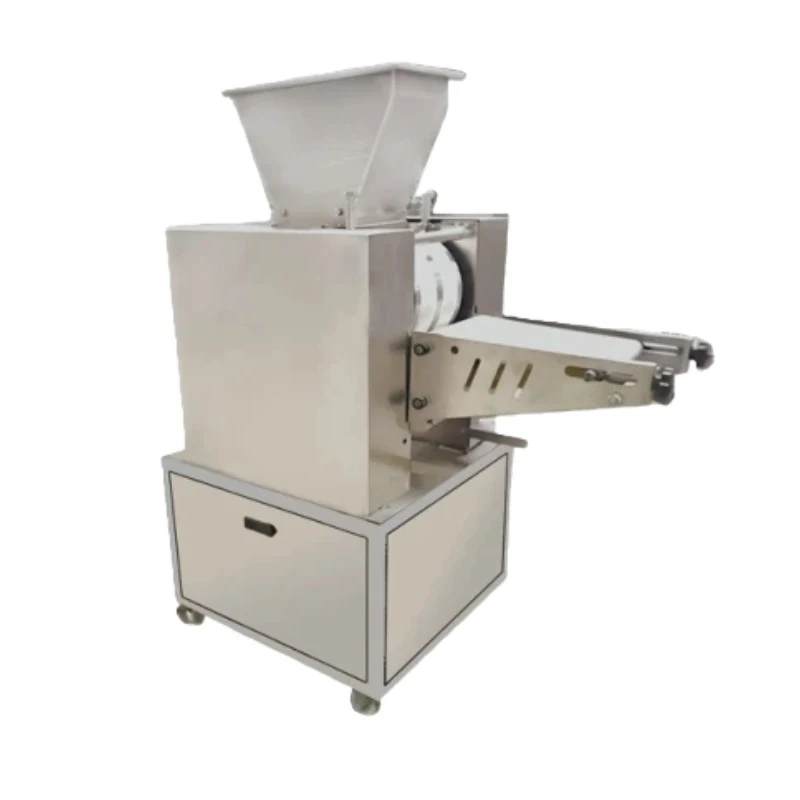
Choose a commercial cookie machine by testing the dough you intend to produce, the shape and weight you want to sell, and the way pieces will reach the oven. A clean sample tray is a good starting point. For a purchase decision, check what happens when the hopper level falls, the operator changes trays, and the line restarts after a pause. Follow the pieces through baking so the result reflects what the customer receives.
Shortlist the right forming process
Start with a photo or sample of the finished product and a description of the dough at the point of forming. For a shaped Chinese-style walnut cookie or similar product, review the cookie forming machine range. For a soft dough that must be portioned onto trays, review the cookie depositor range. The same commercial term can refer to different equipment, so ask the supplier to name the process and tooling offered for each recipe.
Industrial equipment suppliers distinguish depositing, wire cutting and other methods by product and machine configuration. If you need wire cutting, filled cookies or a particular attachment, have the supplier confirm that function for the quoted machine and demonstrate it on your product. GEA manufacturer examples of depositor and extrusion configurations
Send a recipe and sample brief the supplier can work from
Include the desired raw piece weight, baked dimensions, surface pattern and acceptable variation. Describe how the dough arrives at the machine, including its temperature range, resting time and any pieces such as nuts or chocolate. State the tray dimensions, target layout, and whether operators load and remove trays by hand. If you cannot share a proprietary recipe, provide the handling properties and agree on representative samples for the trial.
Bring at least two products if they define different ends of your range. One might be your softest dough and another your firmest dough. A cookie with inclusions may warrant its own run. Keep each test group separate, with its own tooling, settings and acceptance criteria. That lets you see whether the same machine setup serves both products or whether the quote needs another set of parts.
Send your cookie samples, target weights and tray layout for a machine quote
Measure consistency during production, not just at startup
Agree on a sampling plan with the supplier. Inspect a set of pieces at startup, during steady production, after a routine pause and as the hopper level falls. On a multi-outlet configuration, label samples by outlet. Record individual weights and shapes before baking. After baking, record the defects that make pieces unsaleable, such as spreading beyond the planned spacing, broken edges or an uneven finish.
Choose a weight tolerance that matches your business and product. Compare the spread of the individual readings as well as the average. A tray can have the right average while one row consistently runs light. If pieces begin to lose their shape after a pause, note how long the dough was held and the setting used when restarting. Change one factor at a time where possible, so a later retest can reproduce the result.
Calculate accepted pieces per minute
Suppose a trial forms 300 pieces in ten minutes. Twelve pieces fail the agreed weight or shape criteria before baking, and another eight fail after baking. If the two groups do not overlap, the run yields 280 accepted pieces, or 28 per minute over the forming interval. Record whether the measured time included tray changes and pauses. For a shift forecast, add time for normal cleaning and recipe changes and check how much the oven and cooling area can handle. This example shows the arithmetic and is separate from any machine rating.
Check the handoff to the oven
Use the same receiving surface you expect to buy or use. Verify the number of pieces across a tray, the distance between pieces and the margin near the edges. Check spacing after baking, since pieces can spread. If the forming machine can fill trays faster than your rotary oven accepts them, include staging space and a plan for how long the dough can wait under your normal process.
For a manual tray change, observe where the operator stands, how the next tray is positioned and what happens to the first pieces after a restart. If the supplier proposes a conveyor, request the handoff dimensions and confirm which components are included. Test the actual transfer before assuming the two stations will run together at a quoted rate.
Compare quotes using the accepted setup
Ask each supplier to list the machine configuration, agreed forming tools, any optional tools, electrical requirements and included accessories. Request the cleaning and changeover instructions for the proposed equipment. If your product contains allergens, include your own cleaning and release requirements in the evaluation. Check which spare parts are required for routine service and how they are identified. Keep the test record with the quotation, and list packing, international freight and commissioning separately.
Write a product acceptance sheet before the trial
Define an acceptable piece before the machine starts. Record target raw weight, baked dimensions, thickness, surface pattern, edge condition, inclusion condition and the defects that make a cookie unsaleable. If color matters, agree on how samples will be compared under consistent lighting. The buyer should set tolerances from the product and commercial requirements; this guide does not invent a universal percentage.
Use an identified sample group for every recipe and setting. Keep raw and baked observations linked so the team can distinguish a forming issue from an oven or cooling issue. Photograph representative accepted and rejected pieces with their sample numbers. If the test changes dough, tooling and machine setting at once, the result will be difficult to reproduce.
Control dough condition and hopper dwell time
Record dough temperature, mixing completion time, rest period and the time loaded into the hopper. Note how long each sample remains in the hopper before forming. If the dough becomes firmer, softer or oilier during the run, record the change instead of compensating without documentation. For a confidential formula, the buyer can provide handling ranges and prepare material under an agreed confidentiality process, but the supplier still needs enough information to select a suitable forming method.
Test more than a freshly mixed batch. Include a normal production delay and a restart after a pause if these occur in the bakery. Watch the first several rows after restarting and compare them with steady production. If the operator must discard or manually adjust pieces, include that result in accepted output and staffing calculations.
Confirm tooling and changeover scope
List every die, mould, nozzle, roller or forming part required for the approved products. Mark which parts are included, optional or to be developed after the trial. Ask how product dimensions are adjusted and which changes require different tooling. A photograph of a cookie does not prove that the quoted machine includes the tool that formed it.
Observe one representative changeover. Record shutdown, removal, cleaning, installation, alignment, test pieces and return to accepted production. Ask for the recommended cleaning method and identify product-contact parts. Material declarations, food-contact suitability or certifications should be requested and verified for the exact supplied components; they should not be assumed from a generic machine description.
Run a trial matrix that represents the shift
| Trial point | What to record | Buyer question |
|---|---|---|
| Startup | First accepted piece and settings | How much setup and waste occurs? |
| Steady run | Individual weights, shapes and time | Is the output repeatable? |
| Lower hopper level | Outlet-to-outlet pattern and weight | Does consistency change? |
| Pause and restart | Hold time, adjustments and rejects | How quickly does accepted production return? |
| Product changeover | Tools, cleaning steps and elapsed time | Is the daily product mix practical? |
| Baked result | Spread, breakage, surface and accepted count | Does forming translate into saleable cookies? |
Agree on sample sizes and responsibilities before the run. The buyer should identify the recipes that represent the softest, firmest or most inclusion-heavy doughs in the intended range. Any function not demonstrated should remain unconfirmed in the order record.
Calculate line capacity from accepted output
Convert a forming trial into a line plan by following accepted pieces through trays, baking, cooling and packing. Start with accepted pieces per observed minute. Multiply by productive minutes only after subtracting normal changeovers, cleaning and planned stops. Then compare the result with trays per oven load and the time between oven starts.
For an illustrative calculation, 28 accepted pieces per minute over 45 productive minutes equals 1,260 accepted pieces in that hour. If a tray holds 30 pieces after spacing is verified, the forming station creates 42 trays. This is arithmetic only, not a machine rating. If the oven accepts 32 trays per load, the schedule needs a plan for the remaining trays and for the time they wait.
Check tray handling and downstream interfaces
Provide the outside tray dimensions, edge profile, material, usable area and target row spacing. Confirm whether the machine indexes loose trays, deposits on a belt, or requires an operator to position and remove each tray. Ask for the discharge height, conveyor dimensions and controls for the quoted configuration. Include space for filled trays that wait for the oven and empty trays returning to the operator.
If an automated handoff is required, request a dimensioned interface and define which supplier owns each control and guard. If the project uses manual transfer, include operator reach, tray weight and the rate of tray changes in the trial. The safe arrangement must be reviewed for the actual workplace rather than inferred from a catalog photo.
Plan cleaning, allergens and routine service
Ask the supplier to demonstrate access to product-contact areas and to provide the applicable cleaning instructions. The bakery should define its allergen separation and verification requirements. Record which parts are removed, the tools needed, drying and reassembly steps, and how the first product after cleaning is released. Do not promise a cleaning time until the agreed procedure is tested.
Request a spare-parts list that identifies routine wear items, recommended quantities and part numbers. Confirm what operator training and remote or on-site support are included in the quotation. Local electrical installation and guarding should be reviewed by qualified personnel for the destination.
Build a like-for-like quotation table
- Exact machine model and demonstrated forming process.
- Verified recipes, raw-piece ranges and accepted baked products.
- Included and optional tooling, trays, conveyors and controls interfaces.
- Electrical supply, dimensions, access, cleaning and spare-parts scope.
- Trial record, manuals, packing, training and commissioning responsibilities.
- Machine price, international freight and destination work listed separately.
Leave untested products and unconfirmed functions visible. Wire cutting, filled-cookie capability or automatic tray handling must be demonstrated and written into the configuration before they become purchasing requirements.
Additional buyer questions
Is wire cutting included in every commercial cookie machine?
No. Depositing, extrusion, moulding and wire cutting are different configurations. State the required process and have it demonstrated and listed in the final quotation.
How should I compare a cookie depositor with a forming machine?
Compare both against the same doughs, target shapes, accepted baked result, tray workflow, cleaning routine and changeover schedule. The correct process depends on the product rather than the category name alone.
Does the quoted price include tooling, freight and commissioning?
Ask for separate lines. The machine, approved tooling, optional tools, packing, international freight, installation and commissioning should be identified so competing offers have the same scope.
Frequently asked questions
Can the same machine form all my cookies?
Compare each dough and shape against the offered configuration. Ask which tools are included, and demonstrate the most difficult recipes before approving the purchase.
Should I compare machines by pieces per minute?
Record the time and count for pieces that meet your agreed weight and baked quality. Include the tray changes and stoppages that occur during your actual shift.
What should I send for the first quotation?
Send product photos, dimensions, target raw weight, dough characteristics, tray format, target production and destination. Include any forming function that must be demonstrated.
Conclusion
Make the purchase decision from a representative trial and the accepted baked results. Keep the dough, tooling, tray arrangement and operating conditions with the quote so both sides know what the machine is expected to do.