Buying Guide · commercial kitchen equipment for bakery
Commercial Kitchen Equipment for a Bakery: Build a Complete RFQ
 Written and reviewed by BelindaCEO of Shanghai Hongzhong · equipment selection and export project guidance
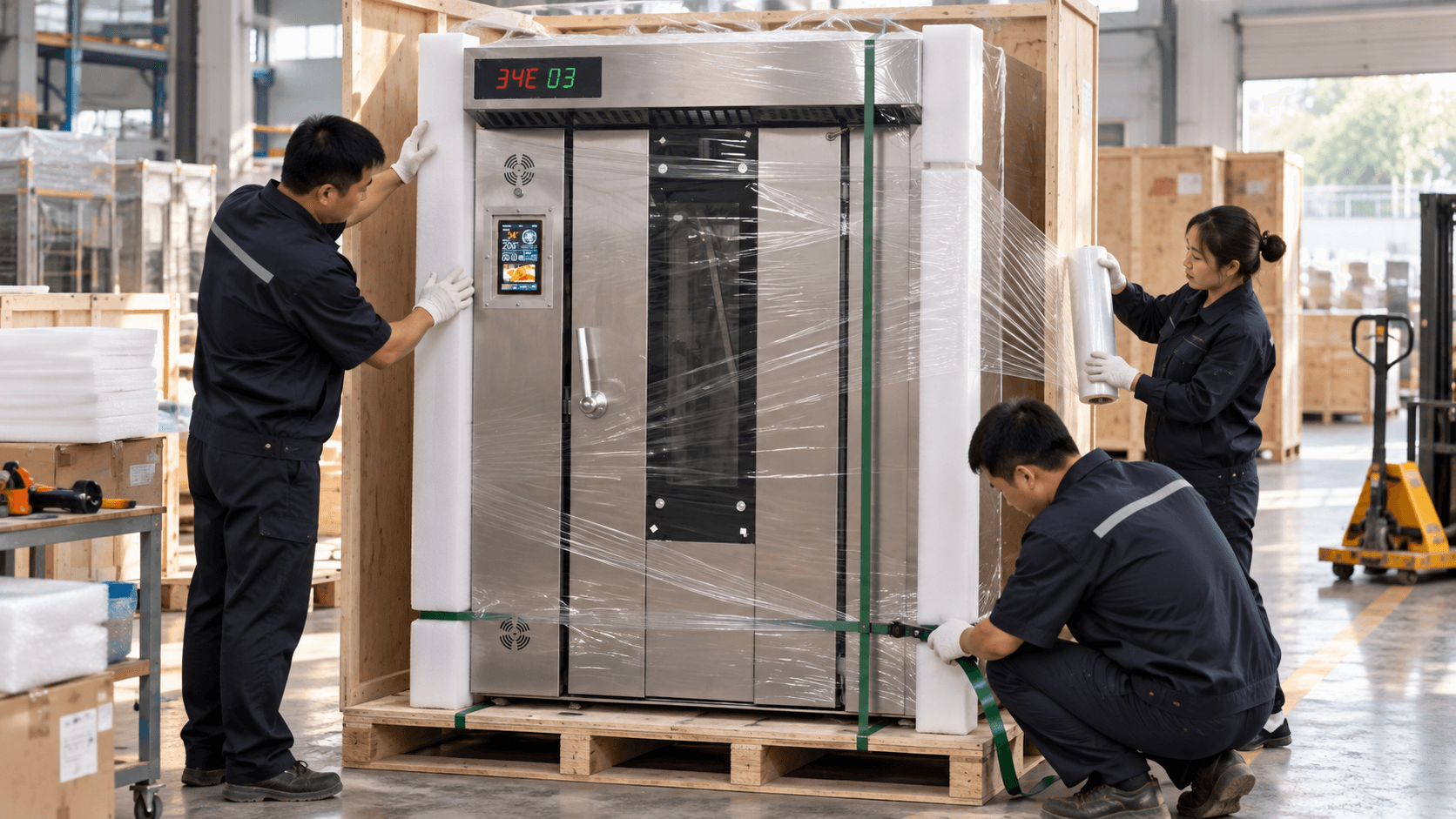
Commercial kitchen equipment is a broad search term. For a bakery project, it should lead to a disciplined equipment and site plan rather than a generic appliance list. A bread, pastry or cookie operation needs production equipment, storage, washing, ventilation, utilities, handling tools and a workable route for ingredients, racks and finished products.
This guide explains how to prepare a request for quotation that distinguishes bakery machines supplied by a manufacturer from site items normally coordinated with local contractors. The result is a clearer scope, fewer missing connections and a more useful comparison between offers.
Separate bakery production equipment from general kitchen equipment
Bakery production equipment changes ingredients into consistent saleable products. Depending on the menu, this may include dough mixers, planetary mixers, dividers, rounders, moulders, proofing equipment, cookie machines, depositors, bread slicers and rotary rack ovens. General commercial kitchen equipment may include refrigeration, ingredient storage, worktables, sinks, washing equipment, extraction, trolleys and packing-area fixtures.
Do not assume one supplier provides every item. Ask each bidder to mark supplied, optional, excluded and locally sourced equipment. This is especially important for ventilation, fuel trains, electrical distribution, water treatment, drainage and fire-safety work, which depend on destination rules and the final site.
See Hongzhong bakery equipment categories
Start the RFQ with products and service model
List what the bakery will sell, the target unit weight and the quantity required inside each dispatch period. A retail bakery with frequent small batches needs different flexibility from a wholesale bread supplier loading full racks. Record opening hours, production shifts, expected peak days and whether the team changes between bread, cakes and cookies in the same room.
Add the service model. State whether products are sold immediately, cooled and packed, frozen, delivered to stores or held for later dispatch. Cooling, slicing and packing can become the real constraint even when the oven has sufficient capacity.
Use a room-by-room schedule
Create a schedule for receiving and dry storage, cold storage where required, weighing, mixing, forming, proofing, baking, cooling, slicing or decorating, packing, washing, waste handling and dispatch. Identify which areas must be separated by the bakery’s food-safety plan. A supplier can then propose equipment locations without treating the kitchen as one empty rectangle.
Choose mixers from recipe and batch information
For dough mixing, provide flour weight, total dough weight, hydration range, batch frequency and target dough temperature. Hongzhong’s dough mixer range starts at 60 L. For planetary mixing, the range starts at 50 L. These lower bounds help define the current catalog, but bowl capacity alone does not establish a recipe batch. Confirm the intended product and tool with the supplier.
Plan ingredient staging and movement around the mixer. Check bag handling, weighing position, bowl loading height, dough discharge and the route to the next machine. Leave safe access for operation, cleaning and service. If a lifter or transfer device is proposed, request its working dimensions and interface.
Plan proofing, ovens and rack circulation together
For tray-based bread and pastries, count how many trays must proof during one oven cycle. Record tray size, shelf spacing, product height and rack dimensions. Confirm whether the same rack can move through the proofer, oven and cooling area. Similar nominal tray counts do not guarantee mechanical compatibility.
A rotary oven can support repeatable rack-based production, but the correct configuration depends on loading and schedule. Compare 16-, 32- and 64-tray choices against the recipe, not only the target daily mass. Confirm fuel or electrical supply, voltage, frequency, ventilation, exhaust, steam requirements where applicable, access route and service clearance.
Review Hongzhong rotary rack oven configurations
Include bakery tools and accessories in the scope
Trays, bread pans, racks, trolleys and small tools affect production every day. Specify tray and pan dimensions, material, coating or surface requirement, product weight and release method. Hongzhong can quote custom tray and pan sizes and materials, but the buyer should approve drawings and samples before volume production.
Count circulation quantity rather than buying only one oven load. Trays may be in forming, proofing, baking, cooling, cleaning or storage at the same time. Create a simple circulation diagram and add a practical replacement quantity based on handling and the buyer’s operating policy.
Define utilities without guessing site conditions
Provide destination voltage, frequency, phase, available electrical capacity, fuel type, water condition and any utility restrictions. Ask for configuration-specific rated power in kW. Measured electricity use should be reported in kWh over a defined cycle or shift; do not treat rated kW as an hourly energy bill.
Ask for a utility schedule and connection-point drawing. Qualified local professionals should confirm electrical protection, gas or fuel installation, exhaust, ventilation, water, drainage and fire requirements. The equipment supplier can provide machine information, but local approval remains destination-specific.
Design the workflow for people, racks and ingredients
Draw separate paths for raw materials, in-process products, finished products, waste and washing. Mark doors, columns, floor levels and the turning space for loaded racks. Check that the shipping package can reach the installation position; an oven may fit its final location but fail to pass through the receiving route.
Record operator positions and handoffs. A manual tray transfer requires space for the next tray and a safe location for the previous one. A rack oven requires a clear loading route and somewhere for hot racks to cool. The layout should also preserve access to control panels, doors and service points.
Make sanitation and cleanability part of procurement
Ask which components contact food, how they are removed and where residues can accumulate. Include the bakery’s allergen and changeover requirements in the RFQ. The FDA’s current good manufacturing practice framework states that food-contact surfaces should be adequately cleanable and maintained to protect food; the project must also follow the laws and controls applicable at destination. Read 21 CFR Part 117
Check washing capacity and drying storage for trays, tools and removable parts. A production plan that ignores cleaning can overstate sellable output. Include routine cleaning and product-change time in the shift schedule.
Request documentation before shipment
For each supplied machine, request the approved specification, model identification, final layout or connection drawing, operating instructions, accessory list and available maintenance information. Agree on the factory acceptance test before production is complete. The test should verify the ordered configuration and agreed functions rather than rely on a generic promotional video.
Separate the equipment price, export packing and international freight. Identify the delivery term and who handles unloading, inland transport, installation and commissioning. Sea freight is not assumed free. Ask the freight provider and customs broker to confirm destination requirements.
Send your room plan and bakery menu for an equipment-scope review
Frequently asked questions
Does Hongzhong supply every item in a commercial kitchen?
Hongzhong focuses on commercial bakery production equipment and related tools. Mark refrigeration, washing, ventilation and other site items separately so the final quotation shows what is included.
What information is needed for a bakery equipment quotation?
Provide products, target quantities and dispatch times, recipe batch information, tray format, room dimensions, utilities, destination and required functions. Photos or samples can clarify forming and finished-product requirements.
Should I buy an oven before completing the kitchen layout?
Confirm the access route, utilities, ventilation, rack path and adjacent proofing and cooling capacity before approving the oven configuration.
Can voltage and fuel options be customized?
Discuss destination voltage, frequency, phase and fuel preference during quotation. The final configuration and site connections must be confirmed in writing.
Conclusion
A bakery uses commercial kitchen equipment as one operating system. A strong RFQ connects product demand, bakery-specific machines, general site equipment, utilities, sanitation and responsibilities. That makes the offer easier to compare and the installation easier to prepare.