Buying Guide · cookie depositor for large inclusions
Specify a Cookie Depositor for Large Inclusions
A depositor for chunky cookie dough should be selected with the actual dough, not a generic claim that it can handle inclusions. Give suppliers the largest pieces, their proportion in the mix and the intended cookie shape, then ask for a trial on the proposed feed and forming setup.
Describe the dough the machine will really see
List each inclusion, its typical and largest dimensions, and whether pieces are soft, hard or fragile. State the inclusion share, dough temperature, batch size and how long the mixed dough waits before forming. These details affect whether the dough reaches the head evenly and whether pieces survive the path.
Include the target portion weight and product shape. A dough that deposits cleanly without chips may behave differently once large nuts or fruit pieces are added. Ask the supplier which stated limits apply to the exact machine, feed arrangement and tooling offered.
Compare forming routes against the product
Wire cutting divides dough at the forming head and is one possible route for chunky products. Reading Bakery Systems describes wire cut applications with nuts, chocolate chips and dried fruit. That example does not establish the allowable particle size for another supplier’s machine.
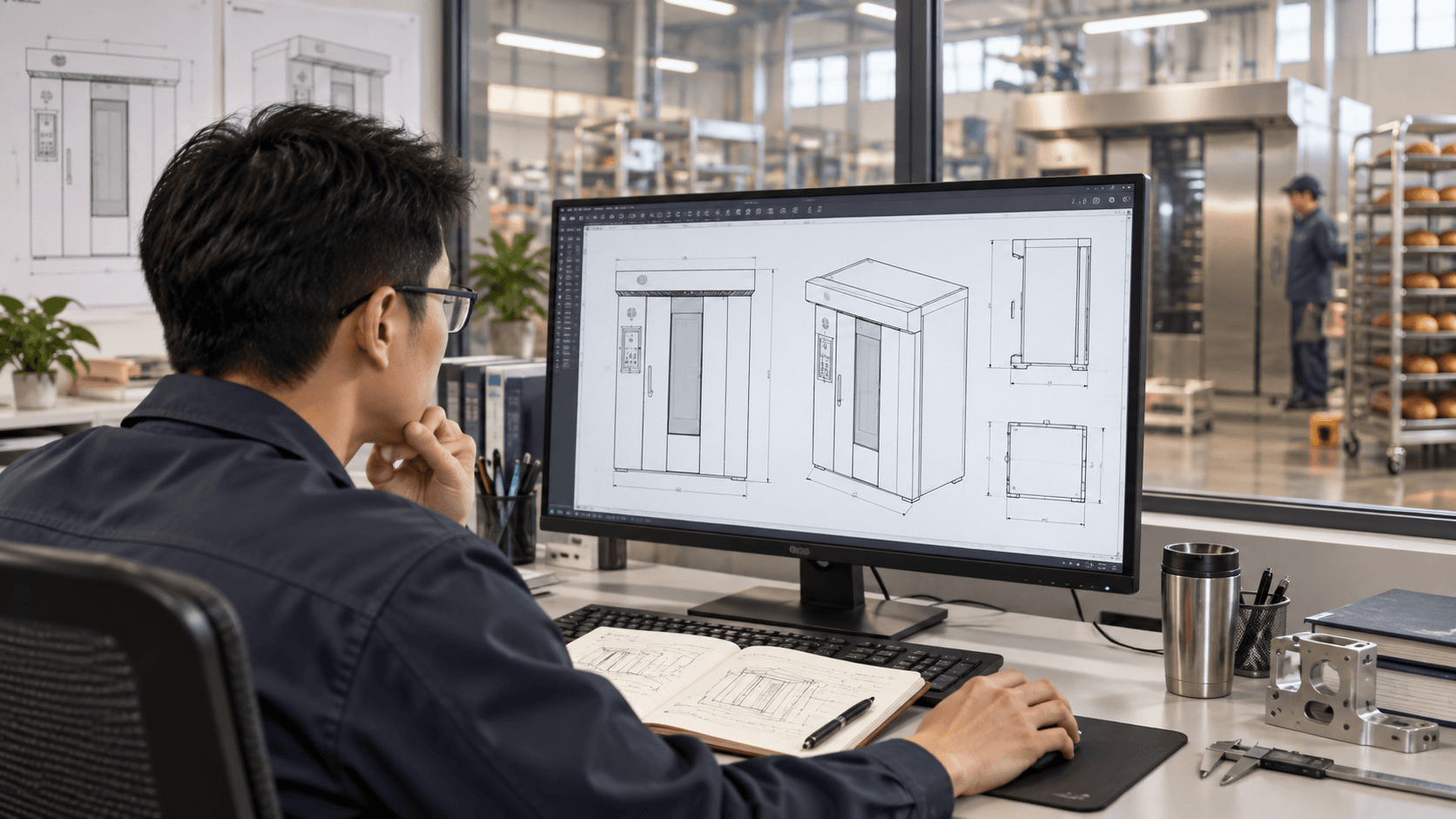
Request a drawing of the hopper outlet, feed path, head and die or wire assembly. Identify the narrowest product passage and the parts that change for another recipe. If a supplier proposes a different depositing method, compare its effect on the same dough and final shape rather than treating machine labels as interchangeable.
Make the product trial measurable
Supply a representative batch and agree the run duration, operating speed and tray or oven-band arrangement before the trial. Collect samples from startup, steady running and restart after a short stop. Record blocked passages, misshapen pieces, weight spread and visible damage to inclusions.
Photograph whole and cut cookies against an approved reference. A few attractive samples are not enough if the next hundred portions contain crushed pieces or empty areas. Keep the settings and dough condition with the results so the supplier can explain any required change to the proposed configuration.
Close the quotation around changeovers and cleaning
Ask which heads, dies, wires, scrapers and feed parts are included, optional or recipe-specific. Confirm how operators access product-contact surfaces and what must be removed for cleaning. Inclusion fragments can lodge in an unsuitable path, so the proposed cleaning method matters as much as the forming demonstration.
The quotation should name the tested configuration, supported product range and any unresolved size or proportion limit. If the offered machine differs from the trial setup, request written evidence for that difference before approving the order.
Frequently Asked Questions
Can any wire cut machine handle large chocolate pieces?
No. Ask for the allowable piece dimensions and test the actual dough on the proposed feed and forming parts.
What should I send before a depositor trial?
Send the recipe range, largest inclusion sample, inclusion share, target weight, product shape and expected production window.
Should the trial include a stop and restart?
Yes. It shows whether the dough feeds and portions consistently after a normal line interruption.
Continue planning
Plan Your Bakery Equipment Project
Send your dough description, inclusion samples, target cookie weight and line layout. Ask Shanghai Hongzhong to identify a configuration and trial questions for your product.
Get a Quote →