Buying Guide · pass-through rotary rack oven selection
When Does a Pass-Through Rotary Rack Oven Make Sense?
Choose a pass-through rotary rack oven only when its two-sided loading pattern solves a real layout requirement. The decision depends on the route of raw and baked products, door access, rack handling, service space and site utilities, not on door count alone.
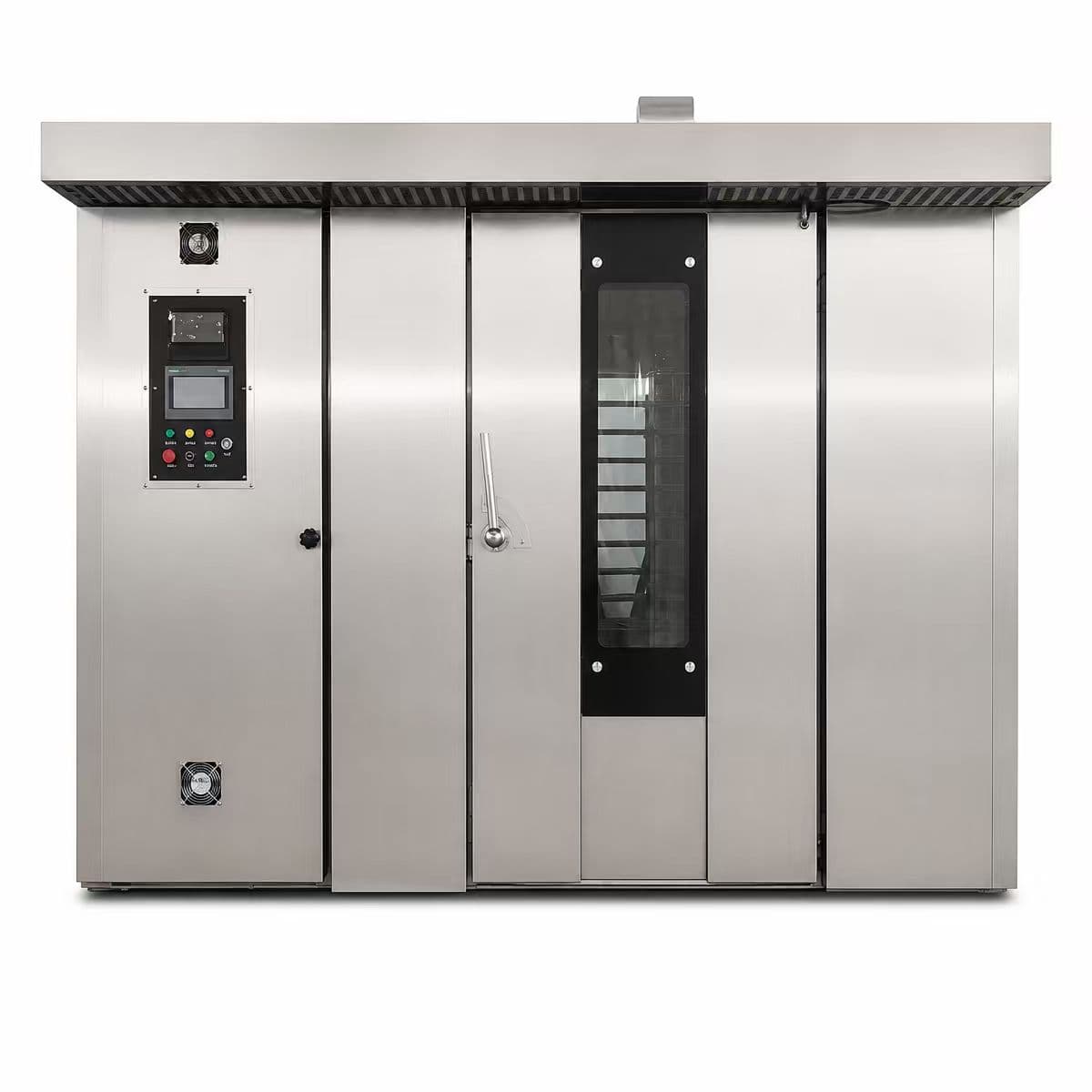
Draw the intended one-way flow
Mark where prepared racks approach the oven and where baked racks leave for cooling. A pass-through arrangement can support movement from a preparation side to a separate finish side, but only if both sides have space for a full rack, an operator and the door swing or travel required by the selected model.
A wall line on a plan is not sufficient evidence of separation. Review how people, utensils, empty racks and cleaning tasks cross between zones. The bakery's food-safety team should decide whether the proposed room arrangement meets its own process controls.
Compare with a conventional loading pattern
For a single-sided arrangement, measure how incoming and outgoing racks share the access area. If the production schedule is modest and a safe route can be maintained, a pass-through feature may add complexity without fixing a bottleneck. If dispatch volumes or room segregation make crossings difficult, model both rack paths on the floor plan.
Use the same tray size, rack dimensions, batch schedule and energy configuration when comparing options. A layout decision should not be confused with an oven capacity decision. The full line must still provide proofing, cooling and packing space at the intended pace.
Check installation and service access
Ask for a configuration-specific general arrangement drawing with packed and installed dimensions, door directions, connection points, exhaust route and maintenance clearances on both sides. Confirm the installation sequence if the oven sits in a wall opening. Local building, fire and utility requirements need review by qualified project partners.
Identify who is responsible for the opening, surrounding finishes, sealing, ventilation and future access to service components. A supplier's oven drawing does not automatically include those building works. Keep the responsibilities visible in the quotation and installation plan.
Agree how the arrangement will be checked
Before release, have the production manager walk a scaled rack route and check the actual door, aisle and turning dimensions. At commissioning, observe loading and unloading with the agreed rack and representative workflow. Record any change in wall position or rack specification before it becomes a site modification.
The selected oven still needs the normal configuration checks: fuel or electrical supply, tray clearance, controls, safety functions and documented operating instructions. A pass-through layout is useful only if the installed bakery can operate and service it safely.
Frequently Asked Questions
Does a pass-through oven always prevent cross-traffic?
No. People, empty racks and utensils may still cross zones; the full process route must be planned.
Is a double-door oven the same as a pass-through oven?
Confirm the exact door arrangement and rack travel on the supplier drawing. Marketing labels alone do not define the workflow.
What drawing should I request?
Request installed and packed dimensions, door operation, rack path, service clearances, utility connections and the proposed wall interface.
Continue planning
Plan Your Bakery Equipment Project
Send your floor plan, wall opening, rack dimensions, product route and utility details. Shanghai Hongzhong can review whether a pass-through configuration fits the proposed bakery workflow.
Get a Quote →