Buying Guide · rotary rack oven preventive maintenance
Rotary Rack Oven Preventive Maintenance: What Buyers Need at Handover
 Written and reviewed by BelindaCEO of Shanghai Hongzhong · equipment selection and export project guidance
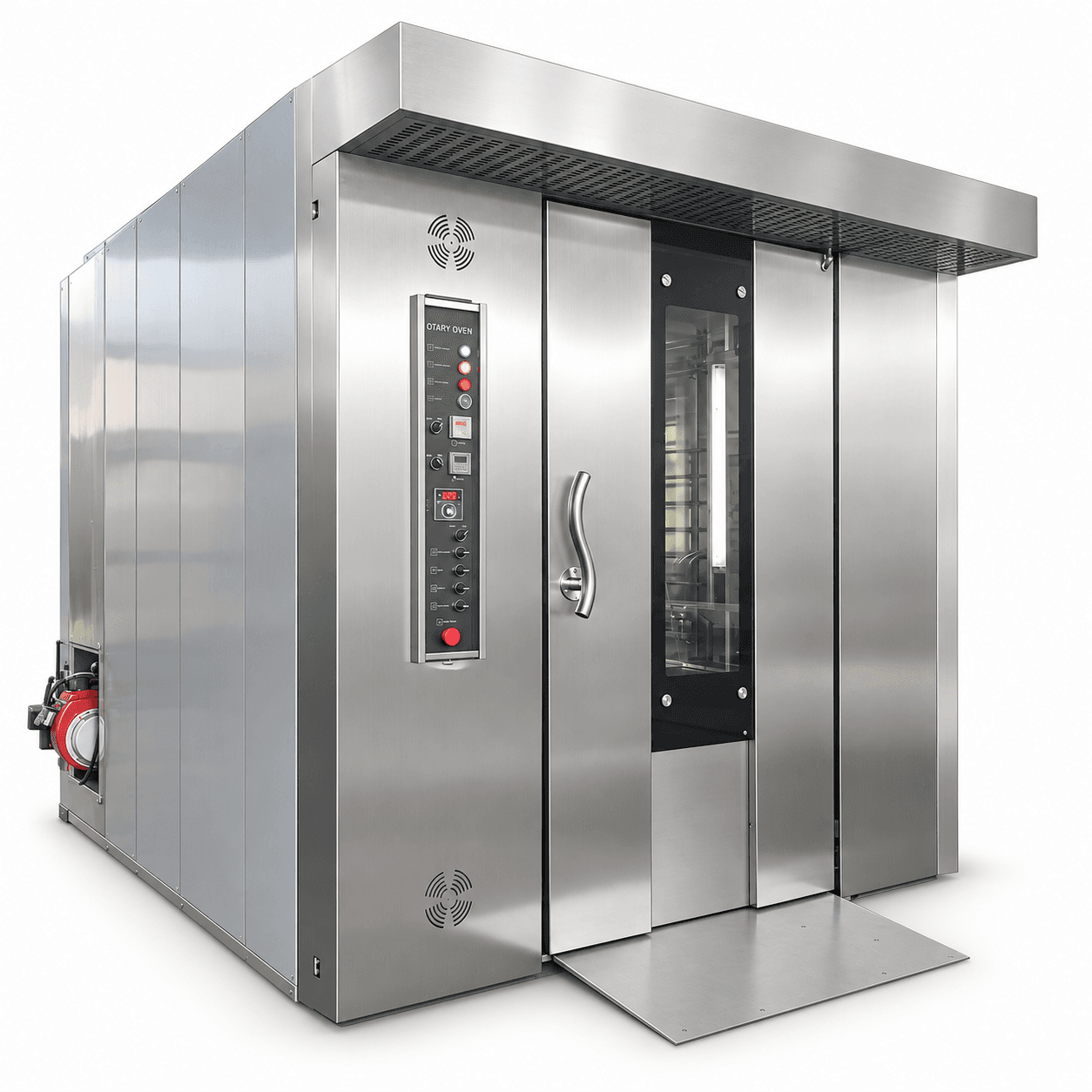
Rotary rack oven preventive maintenance begins with a model-specific handover, not a generic calendar copied from another oven. The buyer needs the approved configuration, manufacturer instructions, inspection points, safe work roles, spare-parts identification and a clear support process before production starts.
Maintenance and replacement parts are prominent 2026 bakery investment concerns, while industry workforce research identifies shortages in maintenance and engineering skills. These are sector signals, not failure data for a Hongzhong oven. Source: American Society of Baking workforce study.
Create the oven equipment record
Record model, unit identifier, tray capacity, rack arrangement, heating source, voltage, frequency, controls and included options. Store the final specification, drawing, nameplate photograph, manual, FAT and commissioning record together.
Identify every supplied rack, tool and accessory. A family name such as rotary oven is insufficient when ordering a component or discussing a fault.
Separate operator checks from technical service
Operators may perform only tasks permitted by the manufacturer and site procedure. Routine observation can include doors, unusual noise, visible damage, displayed alarms and cleanliness. Electrical, fuel, combustion, control or complex mechanical work belongs to qualified personnel.
Create a responsibility matrix for operator, supervisor, sanitation, maintenance, electrician, fuel technician and supplier support. Holding a spare part does not authorize unsafe replacement.
Use the manufacturer schedule as the baseline
Request inspection and maintenance tasks with calendar or operating-hour intervals for the selected configuration. Do not invent a service interval to fill a spreadsheet. Adjustments should follow an approved process based on instructions and operating history.
Record the last completion, observations, parts used, responsible person and next due point. If the oven has several shifts or harsh conditions, ask whether the documented schedule requires additional review.
Inspect rack movement and loading interfaces
Observe rack wheels, supports, platform or hook interface, rotation and stop position according to approved procedures. Check the floor route and thresholds. A damaged rack or obstructed route can affect loading even when the oven mechanism is working.
Use only compatible racks with verified dimensions and loaded mass. Record rack identification where several designs exist.
Protect door sealing and operating condition
Inspect the door, handle, seal and closing behavior using the manufacturer method. Do not adjust a latch or replace a seal solely from appearance. Heat, cleaning chemicals and mechanical damage can affect components differently.
Record leakage observations and product symptoms without assuming the cause. Qualified personnel should diagnose repeated issues.
Maintain air movement and clean access safely
Follow instructions for cleaning accessible chamber surfaces and approved removable parts. Never remove guards or reach moving components during operation. Identify work that requires isolation and trained maintenance staff.
Product deposits, damaged trays or blocked areas can affect operation, but airflow diagnosis needs the manufacturer’s procedure. Do not promise that cleaning alone corrects every baking variation.
Review burner, heater and fuel-system scope
Electric, gas, diesel and confirmed wood-fired configurations have different service requirements. The handover must match the ordered heating source. Fuel and combustion work should be completed by qualified personnel under destination rules.
Record approved fuel information, connection data, exhaust and ventilation responsibilities. Do not substitute fuel or modify combustion settings without written technical confirmation.
Manage water and steam functions
If the oven includes water or steam functions, retain connection, pressure and water-quality instructions for that configuration. Inspect for approved operating condition and report scale, leakage or inconsistent response through the support process.
Water treatment is site-specific. Ask qualified local personnel and the supplier rather than copying another bakery’s treatment schedule.
Use a risk-based spare-parts list
Request part number, description, applicable model, quantity, reason for stocking, storage condition and installation role. Separate consumables, wear items and critical spares. A generic kit may omit configuration-sensitive components.
Prioritize production consequence, sourcing time and local skill, not price alone. Do not substitute safety or control components based only on appearance.
Record faults before changing settings
Capture model, time, program, load, displayed message, observed sequence and recent work. Use safe photographs or video where permitted. State whether the oven is isolated.
Avoid changing several parameters or parts before preserving the original condition. Good evidence makes remote diagnosis more useful and reduces repeated questions.
Connect product checks to maintenance
Track baking results by product and rack position. A repeated change in color, recovery or batch behavior may justify inspection, but product preparation, proofing and tray condition must also be checked.
Use the approved full-load test and commissioning record as a baseline. Do not describe normal variation as a machine fault without controlled evidence.
Plan shutdown and hazardous-energy control
The bakery must establish site procedures for isolation and safe servicing under applicable law and manufacturer instructions. In the United States, OSHA’s control-of-hazardous-energy standard is an important reference; destination rules govern each project. Source: OSHA 29 CFR 1910.147.
Training, authorization and verification should be defined before service. Never use a production deadline to justify bypassing protective functions.
Compare Hongzhong rotary rack oven models
Build the handover package
| Record | Purpose | Owner |
|---|---|---|
| Final specification and drawing | Identify configuration and connections | Project owner |
| Maintenance schedule | Define approved tasks and intervals | Maintenance lead |
| Parts register | Match stock to the exact oven | Stores and maintenance |
| Service log | Preserve inspections and changes | Authorized technician |
| Support procedure | Escalate with complete evidence | Supervisor |
Send your oven model, destination and operating schedule for a maintenance-handover review
Plan maintenance around the production calendar
Map inspections and service work against product campaigns, dispatch peaks and sanitation windows. Tasks requiring a cool oven, isolation or specialist attendance need protected time. If maintenance is repeatedly postponed because production occupies every available hour, the schedule is not workable. Production planning and maintenance should agree on access before the week begins.
Use condition observations to support planning without inventing predictive accuracy. A trend in door behavior, noise, alarms or product results can trigger qualified review, but the manufacturer instructions remain the baseline. Record why work was advanced or deferred and who authorized the decision.
Keep a controlled parts and consumables store
Label each stocked item with part number, applicable model, description, quantity and storage location. Preserve protective packaging and environmental conditions stated by the supplier. Electronic components, seals and bearings can be damaged or become unidentifiable while waiting.
Set reorder points from actual use, sourcing route and acceptable risk. When a part is issued, link it to the oven and service record. Repeated consumption should lead to investigation rather than automatic increases in stock. Keep removed components until the diagnosis or warranty process allows disposal.
Manage software, settings and controller records
Where the ordered controls support programs or backups, record approved recipe revisions and access permissions. Identify who may edit temperature stages, steam commands or timers. A maintenance visit should not leave unrecorded changes that appear later as product variation.
Ask the supplier what backup can be retained by the buyer and how restoration is authorized. Do not connect controllers to external networks or allow remote access outside the buyer’s security process. Remote support should have a defined start, scope and end.
Audit the maintenance program periodically
At a defined interval, compare planned and completed tasks, recurring observations, parts use, downtime categories and product-related reports. The objective is to find gaps in execution and evidence, not to manufacture a reliability percentage. Separate operator error, process variation, utility interruption and confirmed equipment faults.
Update role assignments after staff changes. Confirm that documentation still matches the installed configuration and that emergency contacts, local technicians and supplier channels remain current. Remove obsolete copies from work areas so the team does not follow an old procedure.
Prepare for long-distance technical support
For overseas projects, standardize the first report: model and unit identification, site voltage and heating source, alarm text, operating sequence, product load, safe photographs and recent maintenance. Use a stable file-naming method and preserve the local time of the event.
Clarify time-zone coverage and the work local personnel can perform. Remote advice cannot replace qualified hands-on electrical, fuel or mechanical service. If a replacement must ship, distinguish confirmation, availability, export preparation, transit, customs and installation rather than promising one combined response time.
Frequently asked questions
How often should a rotary rack oven be serviced?
Use the manufacturer’s model-specific intervals and approved site procedure. Operating conditions and observations may require qualified review.
Can operators replace parts?
Only tasks explicitly permitted by instructions and site authorization should be assigned to operators. Specialist work needs qualified personnel.
Which spares should be stored?
Choose from the exact configuration, production consequence, sourcing time, storage needs and local installation capability.
Does uneven baking prove a maintenance fault?
No. Check dough, proof, loading and trays as well as the oven. Use mapped, repeatable evidence.
What should a support request include?
Provide model identification, configuration, message, operating sequence, recent changes and safe photographs or video.
Measure maintenance effectiveness without inventing reliability
Use practical indicators tied to execution: percentage of scheduled tasks completed on time, number of overdue critical actions, time to identify the correct spare part, repeat observations and completeness of fault reports. These indicators show whether the system is being followed; they are not a claim about failure probability or machine life.
Keep production downtime categories consistent. Separate planned service, utility interruption, product setup, sanitation, operator delay and confirmed equipment repair. Without this separation, a maintenance team may be blamed for time that did not result from a technical fault, or a recurring fault may disappear inside a general downtime total.
Review product waste associated with stops carefully. Record the affected batch, process stage and disposition under the bakery’s quality procedure. Do not convert every rejected piece into an equipment claim. Use the evidence to decide whether the next action belongs to recipe control, training, utilities, racks, trays or the oven.
Share a concise review with management and the supplier when support is needed. Include facts, open risks and agreed actions. Avoid publishing unverified root causes. A disciplined record protects production decisions and makes later technical assistance faster.
Conclusion
A rotary rack oven preventive maintenance handover connects the exact oven to safe roles, approved tasks, parts and useful records. Build it before startup, verify it during commissioning and improve it from documented operating history.