Buying Guide · rotary rack oven vs deck oven
Rotary Rack Oven vs. Deck Oven: Which Is Right?
A rotary rack oven and a deck oven can both produce excellent bakery products, but they are designed for different production models. The right choice depends on products, batch size, labour, layout, utilities and growth plans—not on a headline price alone.
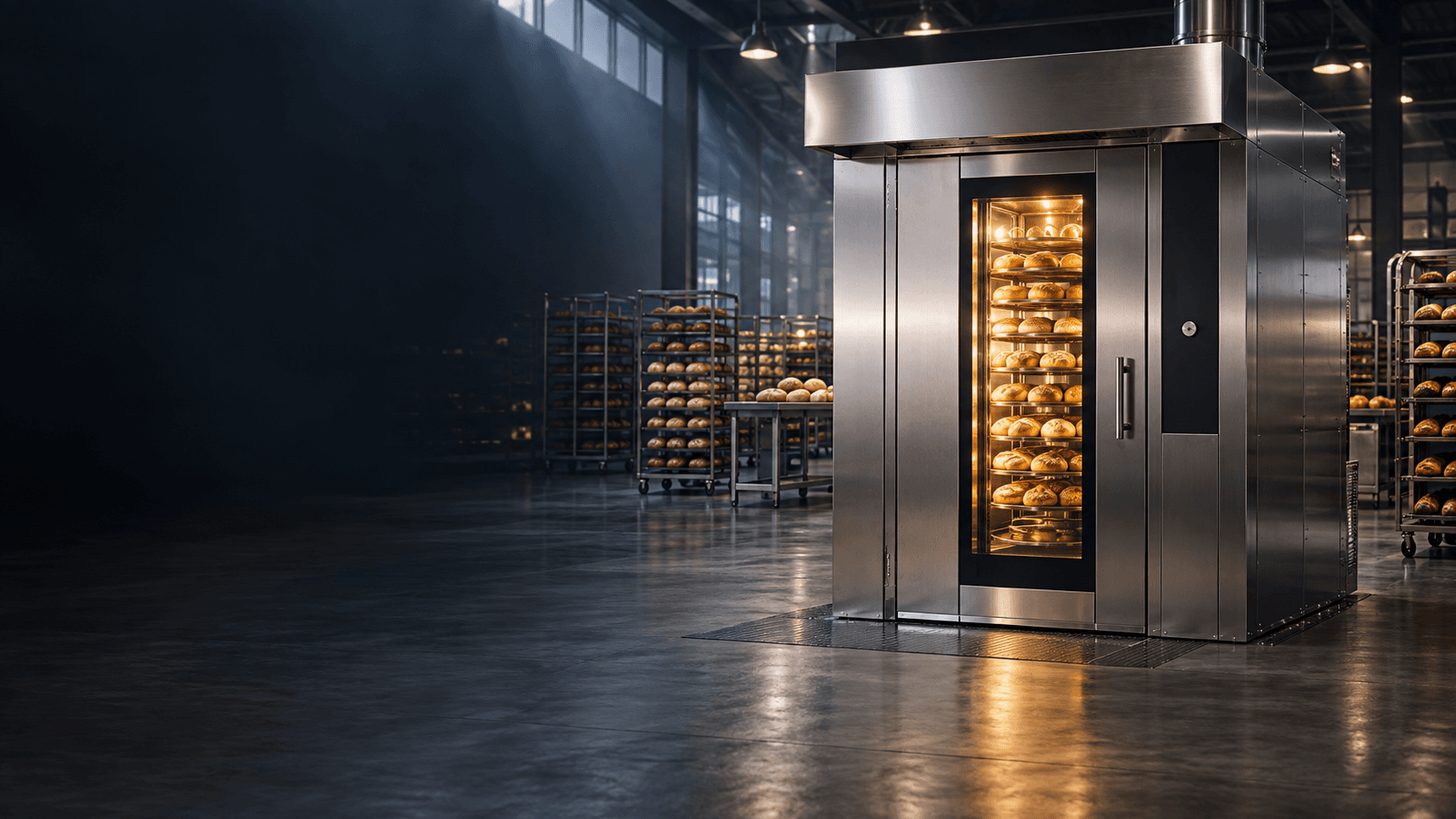
The operational difference
A rotary rack oven accepts a loaded rack and uses rotation with circulating hot air. This suits tray-based production where a complete batch should move efficiently from preparation to baking and cooling.
A deck oven uses separate baking decks. It can give skilled bakery teams flexibility to bake different products in smaller batches and is often considered for artisan loaves, baguettes, pizzas and products that benefit from direct hearth-style baking.
Match the oven to the product mix
Rotary rack ovens are commonly considered for tin bread, buns, pastries, muffins, cakes, cookies and standardised wholesale products. The important point is consistent tray loading and a repeatable baking profile.
Deck ovens can be more appropriate for artisan ranges where independent decks, product variety, baking-surface behaviour and frequent smaller batches matter. Many growing bakeries use both systems: deck ovens for premium artisan production and rack ovens for volume products.
Compare workflows, not pieces per day
A capacity comparison should include unit weight, units per tray, trays per rack, bake time, product changeovers, loading time, shift hours and peak demand. Two bakeries may make bread but still require completely different oven systems.
A rack-based line can make it easier to prepare one rack while another is baking. A deck-based line can make it easier to run separate temperatures or recipes. The best option depends on the bakery's daily rhythm.
Plan utilities and layout
Both oven types require a site review. Confirm electrical or gas supply, ventilation, flue route, clearance, access route, floor condition and local installation requirements before the order is finalised.
Ask for a general arrangement drawing and installation checklist. These documents should be reviewed by the project owner and local installer before shipment preparation starts.
Test the ordered configuration
For a rotary rack oven, review rack rotation, door seal, fan operation, controls and safety functions. For a deck oven, review each deck, controls, doors, steam where included and safety operation.
A factory acceptance test should verify the actual purchased configuration. It is a documented handover point, not an exaggerated performance claim.
Frequently Asked Questions
Can one bakery use both oven types?
Yes. A combined approach can separate artisan or retail products from higher-volume tray production.
Is a rotary rack oven suitable for cakes and cookies?
It can be suitable for tray-based products when the intended baking profile is tested and confirmed.
Should layout be designed before the oven is ordered?
The oven, proofing, cooling, rack movement and utilities should be planned together.
Plan Your Bakery Equipment Project
Tell us what you bake, your daily output, available utilities and layout dimensions. We can help you compare rotary rack and deck oven project options before quotation.
Get a Quote →