Buying Guide · small bread production line staffing
Small Bread Production Line Staffing: Build a Practical Shift Plan
 Written and reviewed by BelindaCEO of Shanghai Hongzhong · equipment selection and export project guidance
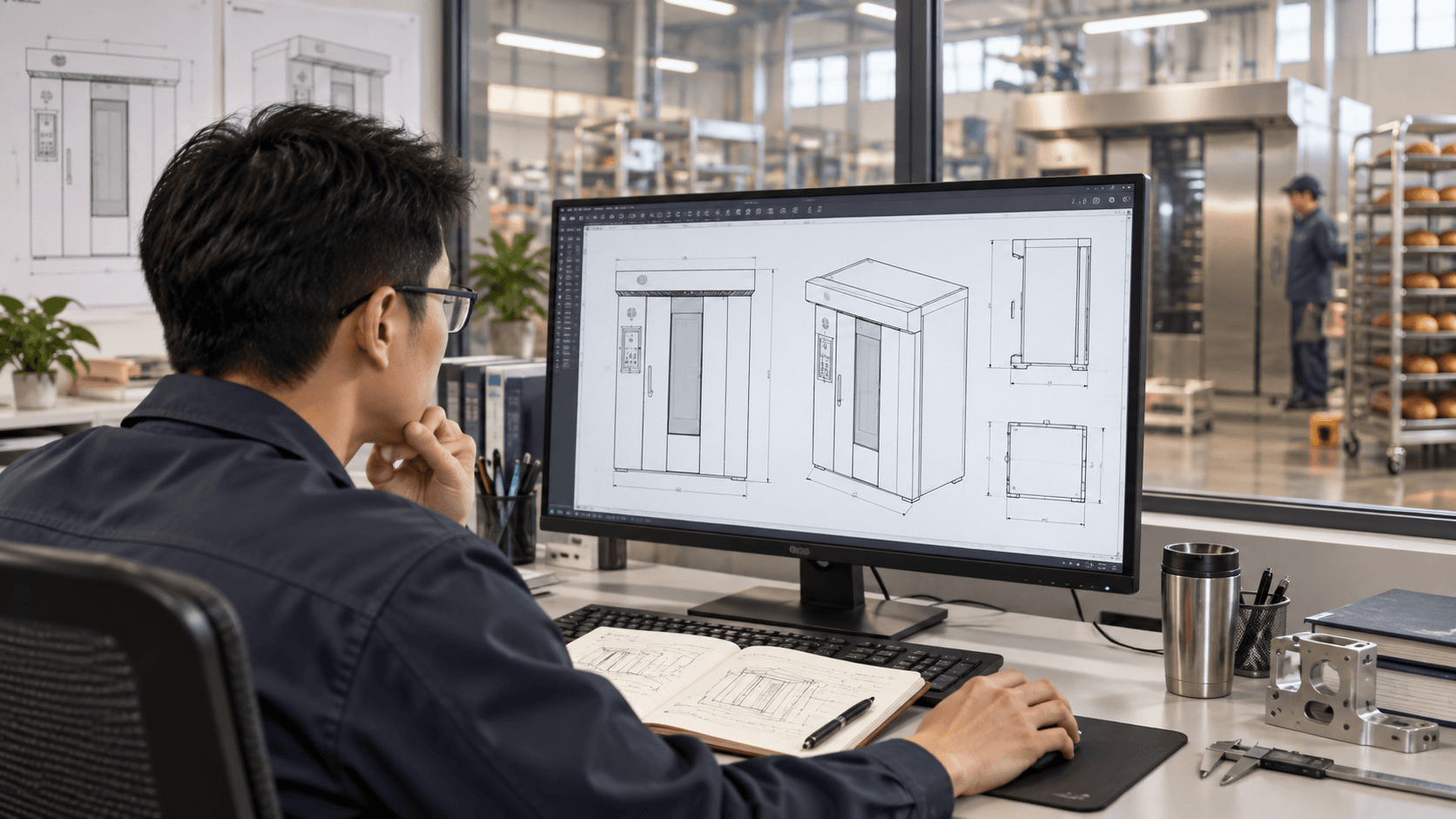
Small bread production line staffing should be planned from tasks, peak dispatch requirements and product changes, not from one promised number of operators. Mixing, dividing, shaping, proofing, loading, baking, cooling, packing, cleaning and maintenance create different labor peaks during a shift.
Industry workforce research reports shortages across production, maintenance and engineering roles and increased use of automation. That supports careful staffing and training, but it does not prove one universal crew size. Source: ASB 2025 workforce study.
Define the products and dispatch window
List loaves, buns and other products with piece weights, batch sizes, pan or tray format, daily quantity and required dispatch time. Separate average demand from the busiest sustained period.
Use accepted product, not gross pieces. Rejects, rework and incomplete packs should not count toward the target used for staffing.
Map every task through the shift
Write the sequence from ingredient preparation to finished-goods handover. Add setup, quality checks, rack or pan movement, cleaning, changeover, break coverage and recordkeeping. Mark tasks that happen simultaneously.
A crew may appear sufficient when only machine operation is counted, then fail when several batches require loading and packing at the same time.
Convert the production plan into time blocks
Record mixing cycles, rest, dividing, moulding, proofing, bake, cooling and packing duration for representative products. Use actual trials where available. Build a time line showing when each task begins and ends.
Daily output alone hides peaks. A dispatch at 07:00 may require overnight preparation, while the same quantity spread through the day needs a different crew.
Identify the bottleneck and protect it
Compare accepted rates at each stage. The lowest sustainable rate controls output. Assign enough people to keep the bottleneck operating without creating unsafe queues.
Do not add labor only at the fastest machine. If proofing or baking limits the line, extra divider operators may create waiting dough rather than more finished bread.
Separate fixed roles from shared roles
Some tasks need continuous attention; others can be combined when timing allows. Document who covers each task and the conditions under which a person may move. Avoid depending on informal assumptions.
Quality release, technical maintenance and hazardous utility work may require specific competence and should not be assigned merely because a person is available.
Plan mixing and ingredient preparation
Match batch size to the 60 L or larger Hongzhong dough-mixer range, recipe and downstream capacity. Record ingredient staging, weighing, bowl or dough transfer and cleaning. One mixer operator may also prepare ingredients only when task timing permits.
Prevent identification errors by defining recipe issue, lot records and batch labeling. Automation does not remove ingredient-control responsibilities.
Plan forming, panning and rack loading
Record how dough reaches the divider, who observes weight, who manages the rounder or moulder and who supplies pans or trays. Include recovery from a short stop and the handling of rejected pieces.
Measure tray and rack movement under realistic load. The staffing plan should not assume one person can safely move, load and inspect multiple stations at once.
Coordinate proofing, oven loading and cooling
Map rack arrival to proofing capacity and oven cycles. Define who confirms proof condition, loads the rotary oven, records the program and moves hot racks to cooling. Use the exact oven and rack arrangement.
Cooling space and time must support the peak oven discharge. Packing staff cannot correct bread that reaches them too warm or in an uncontrolled queue.
Staff packing from the real product mix
Count inspection, slicing where applicable, bag supply, labeling, case packing and finished-product movement. Different products may require manual work even when a bread line is partly automated.
Test the peak packing window and normal interruptions. A nominal packer speed is not accepted output when loading, film change or inspection stops are omitted.
Include sanitation and allergen changeovers
Define cleaning tasks, safe access, approved chemicals, removed parts, inspection and release. Measure last-good to first-good product across the complete changeover.
If allergens or identity-preserved products are involved, the bakery’s food-safety team should approve cleaning and verification. Equipment selection alone does not create a validated program.
Provide break and absence coverage
Plan who covers critical stations during breaks and how the line responds when coverage is unavailable. Do not rely on continuous work outside applicable labor rules or safe practice.
Cross-training can improve resilience, but authorization and competence must be recorded. A trained operator is not automatically a qualified electrician or fuel technician.
Build a skills matrix and training plan
List startup, recipe selection, quality checks, controlled stop, cleaning, fault reporting, basic permitted inspection and emergency response. Mark who is trained, observed and authorized.
Repeat training after initial production. Real shifts expose handoffs and timing issues that may not appear during commissioning.
Use automation to solve a measured task
Consider dividers, moulders, depositors or handling equipment where repetitive labor, variation or capacity evidence supports the investment. State which tasks automation removes, changes or adds.
Do not reduce the planned crew before testing setup, monitoring, cleaning and fault recovery. A faster machine can increase demand at another station.
Review Hongzhong bakery equipment for a small bread line
Create a shift responsibility table
| Stage | Primary responsibility | Coverage question |
|---|---|---|
| Mixing | Ingredients, recipe and batch condition | Who covers weighing and discharge? |
| Forming | Weight, shape and transfer | Who responds to a short stop? |
| Proof and bake | Rack condition and program | Who covers loading and unloading peaks? |
| Packing | Accepted product and labels | Who covers film or product change? |
| Sanitation | Cleaning and release | Is enough time protected? |
Send your products, shift hours and output target for a line-and-staffing review
Model the first two hours of the shift
Startup often concentrates work: ingredient release, weighing, mixer preparation, pan supply, proofer checks, oven preheat, packaging materials and sanitation release. Put these tasks on a minute-by-minute worksheet and mark which can be performed before production. Do not assume one person can prepare several stations simultaneously.
Repeat the exercise for the busiest dispatch window. The crew needed at startup may differ from the crew needed when ovens discharge and packing peaks. Staggered starts can fit the process better than placing everyone on one identical shift, subject to local labor requirements and safe supervision.
Calculate effective shift output
Start with accepted units per batch and realistic cycles, then subtract setup, breaks, product changes, sanitation, planned inspection and ordinary waits. Keep the calculation by product because loaf size, proofing and bake programs differ. A machine’s maximum speed is not effective shift output.
Compare the schedule with staff availability at each handoff. If a moulder can feed pans faster than workers can place or move them, either change handling, staffing or rate. Use a representative trial and count rejects as well as good pieces.
Plan supervisor and quality coverage
Define who releases ingredients and recipes, approves dough condition, checks piece weight, verifies proof, confirms oven program and releases packed product. A small team may combine roles, but the responsibilities and authority should remain visible. Avoid self-approval where the bakery’s quality system requires an independent check.
Give the shift leader a controlled response for common disruptions: late ingredients, mixer delay, proofer queue, oven stop, packaging shortage and product hold. The response should protect food safety and product identity rather than chase output.
Include receiving, storage and dispatch work
A production-line crew does not operate in isolation. Ingredients must be received and stored, packaging supplied, finished goods counted and dispatched, and waste handled. Decide which roles belong to the line and which are shared with warehouse or delivery teams.
Mark forklift, lifting or vehicle tasks that require specific authorization. Schedule ingredient and finished-goods movement to avoid cross-traffic with hot racks, cleaning and operators.
Use overtime and temporary labor cautiously
Do not build the base plan on continuous overtime. Fatigue, training gaps and changing availability can undermine product consistency and safe operation. If temporary staff are used, assign tasks appropriate to their training and preserve supervision at critical points.
Measure whether overtime solves a temporary demand peak or hides an equipment, changeover or planning bottleneck. Compare accepted output and quality, not only hours worked.
Review staffing after commissioning
Run the proposed crew through representative products and a complete changeover. Record waiting, walking, queues, missed checks and tasks that require two people. Adjust layout, tools, standard work or staffing from evidence.
Review again after several weeks because experienced operators may improve timing while maintenance and sanitation demands become clearer. Do not announce a permanent labor saving from one demonstration shift.
Frequently asked questions
How many people does a small bread line need?
There is no universal number. Map tasks, simultaneous peaks, automation, cleaning, breaks and required skills for the actual products.
Can one operator run several machines?
Possibly when timing, visibility, safe work and training allow it. Verify the combined task during a representative shift.
Does automation eliminate skilled roles?
No. It may reduce repetitive handling while increasing setup, monitoring, troubleshooting and maintenance needs.
Should cleaning be counted as production labor?
It belongs in the complete staffing and shift plan even if reported separately. Omitting it makes effective output unrealistic.
What data should be sent with an RFQ?
Send products, piece weights, batches, peak output, shift pattern, trays or pans, room plan, utilities and intended automation.
Build a staffing scenario for growth
Create current, peak and expansion scenarios using the same task map. Change only documented assumptions such as shifts, product mix, equipment, batch size or dispatch window. Show which roles increase, which tasks are automated and which skills become more important. Do not reduce staffing by applying a percentage to the entire crew.
For a second shift, include supervision, quality release, maintenance response, sanitation, warehouse and management coverage. A second production crew does not automatically duplicate every daytime support role, but the bakery must define who is available and how an unresolved issue is escalated.
For an equipment upgrade, run a before-and-after task analysis. A divider may reduce hand portioning but add feeding, settings, monitoring and cleaning. A larger rotary oven may reduce rack exchanges per unit while increasing peak loading and cooling work. Include the changed tasks in the quotation and trial plan.
Use the scenario to plan training and recruitment lead time. Skilled maintenance or supervisor positions may take longer to fill than general production roles. If the project depends on one key person, cross-train a backup before launch. Growth planning is stronger when labor, equipment, utilities and floor space are evaluated together.
Conclusion
A practical small bread production line staffing plan follows the work. Map every task and peak, protect the bottleneck, provide qualified coverage and test the schedule with representative products. The right equipment and the right crew must be planned together.