Buying Guide · bakery equipment RFQ specification checklist
Write a Bakery Equipment RFQ Suppliers Can Answer
A useful bakery equipment RFQ states what the line must produce and what the building can support before it asks for models or prices. Give every bidder the same measurable brief, then require them to state assumptions and exclusions in writing.
Define the production duty
List each product family, piece or dough weight, tray dimensions, batches per shift, operating hours and the output required in the busiest dispatch window. Identify recipe or tooling changes that stop production. A daily total alone will not reveal a short peak that governs the line.
State which figures are measured and which are growth assumptions. Ask each bidder to show how its proposed mixer, former, proofer, oven, cooler and packer rates work together for that product mix. A rated machine speed does not establish accepted finished output.
Describe the site and every interface
Attach a measured floor plan, doorway and ceiling dimensions, rack route and available service space. Provide confirmed voltage, frequency, phase, fuel, water and ventilation information; mark unverified utilities as open items for the local designer. Request installed and shipping dimensions as separate figures.
For each transfer, specify the unit that must fit: tray, rack, dough piece, belt or packed product. Name who supplies connecting conveyors, racks, controls and building services. This prevents an apparently complete equipment list from leaving a gap between machines.
Request comparable documents and exclusions
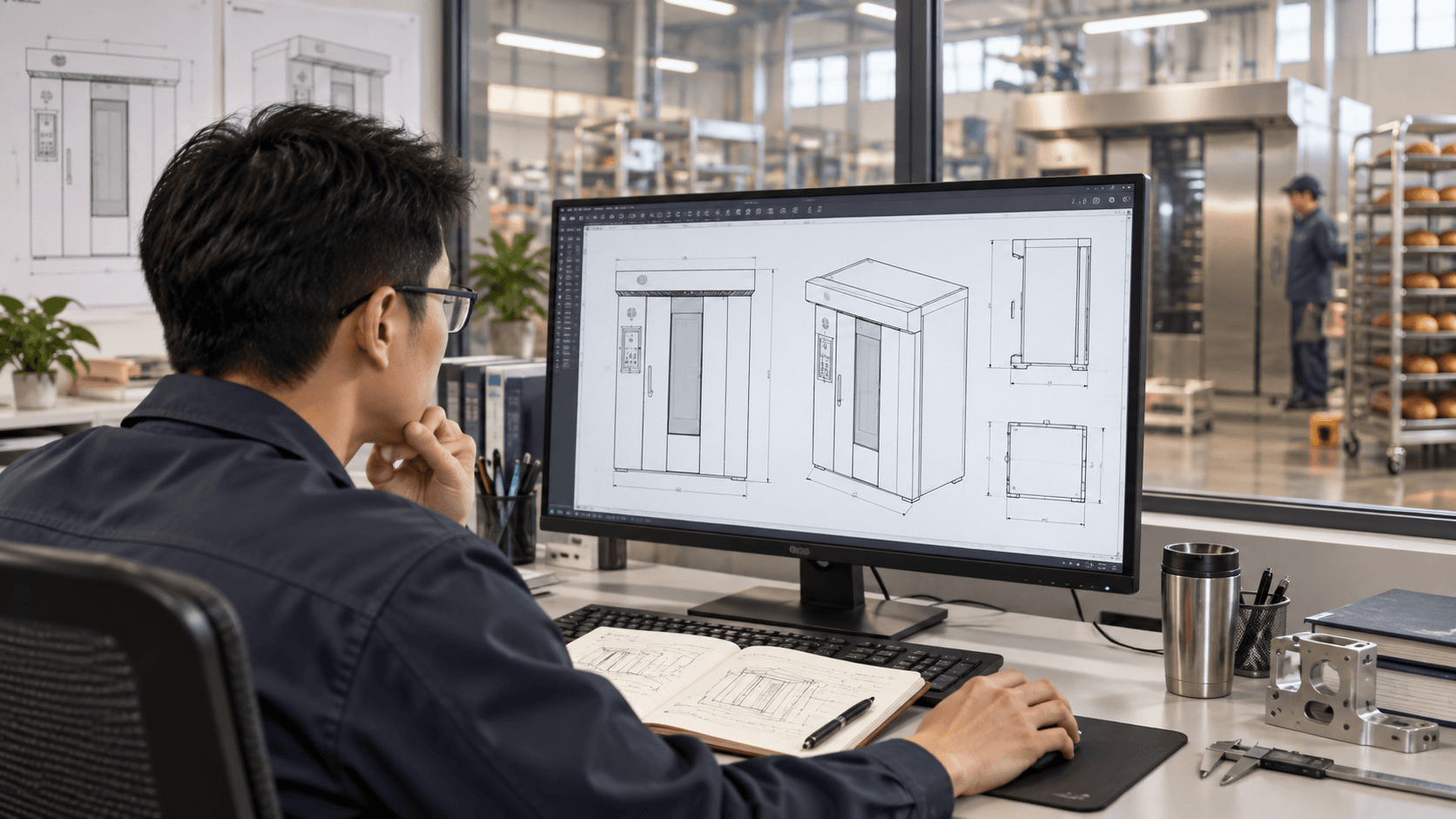
Ask for a configuration schedule, general arrangement drawing, utility schedule, accessory list, operating documentation and a proposed factory test. Require each supplier to identify deviations from the RFQ, optional items, buyer-provided work and the version of every drawing. Manufacturer project descriptions show that production brief, layout and itemised quotation are separate decision stages; use that sequence without adopting another supplier's performance claims.
Keep commercial terms in a separate comparison: delivery basis, shipment scope, local installation, training, spare parts and service route. Ask for a milestone plan with dependencies instead of treating a quoted shipment date as a complete start-up date.
Close open points before placing the order
Create a clarification log with the question, owner, response, drawing revision and acceptance decision. Resolve critical tray fit, utility and safety interfaces before the purchase specification is frozen. Tie the factory acceptance test to the agreed configuration and record any site-only tests for commissioning.
Grace Kitchen Equipment's published project process illustrates how an equipment specification follows a line-balance and layout exercise. Its advertised durations and outcomes are supplier-specific, not planning promises for this RFQ.
Frequently Asked Questions
What is the minimum useful RFQ attachment?
Send a product and peak-output schedule, tray format, measured site plan, known utilities and a list of unresolved interfaces.
Should an RFQ name a preferred model?
It may, but describe the required duty and ask the bidder to explain any proposed alternative.
How should unknown utility details be handled?
Label them open and assign a local specialist to verify them before design approval.
Continue planning
Plan Your Bakery Equipment Project
Send your product schedule, tray format, site sketch and known utilities to Shanghai Hongzhong. Request a configuration and exclusions review against your RFQ.
Get a Quote →