Buying Guide · commercial bakery equipment capacity
How to Size Commercial Bakery Equipment for a Growing Bakery
 Written and reviewed by BelindaCEO of Shanghai Hongzhong · equipment selection and export project guidance
Introduction
When a bakery misses its dispatch window, the machine with the biggest queue often draws attention. The queue is a useful clue, but it can point to the wrong investment. Dough waiting in front of a proofer may indicate that the cabinet is full. It may also mean the oven is late and the proofer cannot release its finished trays. Before buying more commercial bakery equipment, follow one product through the line and record which resource limits the number of saleable orders finished on time.
This guide is for bakeries already producing bread or related products and deciding where to add capacity. For an opening-day shopping list, use the small bread production line guide. Here the goal is to make a defensible upgrade decision using comparable units, a production log and a trial. The examples are hypothetical and do not describe the output of Hongzhong models.
Put every station on the same basis
When budgeting for baking equipment, list the work each purchase will change. A faster oven adds bake slots; it does not add cooling positions or make cartons available earlier. Give each proposed item a measurable purpose, such as clearing a waiting rack before the next unload or finishing the last packed order by the dispatch cutoff. Use those purposes to compare the supplier's scope with the commercial bakery equipment catalog.
Record how the bakery sells the product. If a customer buys packed loaves, use packed, acceptable loaves per hour over a defined period. Do not compare a mixer's kilograms per hour directly with the oven's trays per batch or a slicer's loaves per minute. Keep the original measurements and write down the conversion beside each figure. For pan bread, the conversions can include dough weight per piece, positions per tray, full and partial racks, saleable yield and the time that packing is staffed.
Mixing capacity comes from completed batches
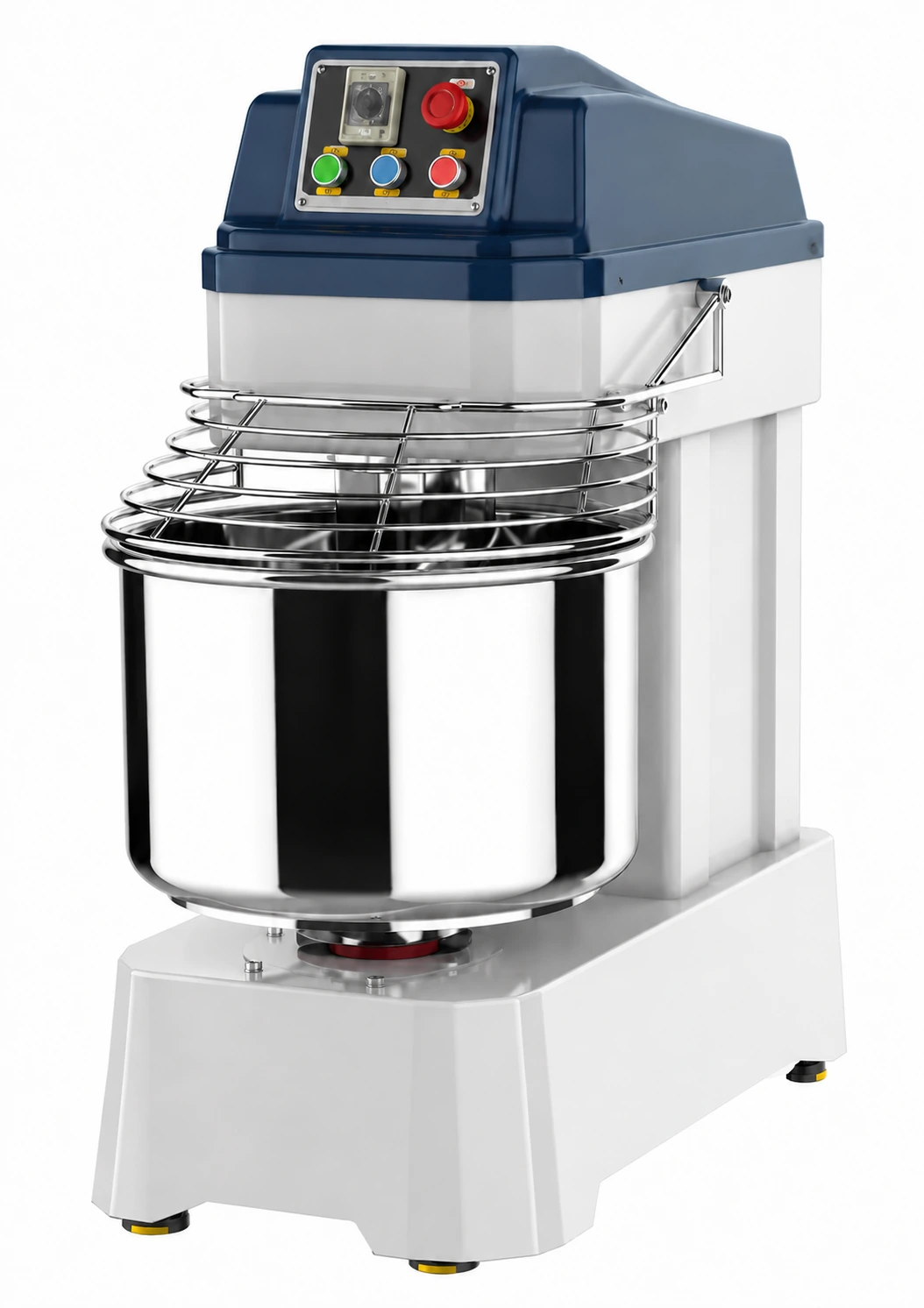
Measure from the beginning of an ingredient load until the mixer is available for the next batch. Capture routine loading, mixing, discharge and recipe change time. If a downstream bench is full and the bowl cannot discharge, mark that as blocked time instead of assigning it to the mixer recipe. Compare the proposed dough mass and recipe with the supplier's stated limits for the model. A larger bowl does not establish the allowable dough mass for every mix. Hobart's published spiral mixer charts are an example of manufacturer-specific capacity documentation. Use the actual Hongzhong quotation for Hongzhong dough mixer sizing.
Proofing capacity comes from slots and occupancy
Count usable trays in the chamber and track occupancy from loading through release. Tray space can be unavailable while a crew waits for the oven or while a cabinet prepares for a different product. Separate required proof time from that extra occupation. Confirm whether equipment can accept the required tray or rack format. Two cabinets with identical advertised tray counts can differ in practical loading and scheduling when batches overlap. Send the rack drawing and the largest product height when comparing proofing equipment.
Oven capacity comes from starts and acceptable results
For a rotary oven, record saleable pieces by rack and the interval from one load start to the next. For an underfilled rack, use the actual loaded count, not the nominal maximum. Record loading, unloading, changes in bake program and time spent waiting for the next rack. If a faster sequence is proposed, confirm it in repeated representative loads before treating the estimate as a purchase benefit. The rotary rack oven category lists the available nominal tray classes for comparison.
A worked example: buying a bigger oven may shift the queue
Imagine a bakery running one pan-bread recipe during a four-hour peak window. Its dough pieces weigh 0.50 kg. The crew uses six pieces per tray after a verified pan layout. Suppose the following figures represent steady-state observations or planning equivalents. Exclude breaks from the period only if each station uses the same convention. The figures are illustrative and must be replaced with the bakery's own data.
| Station | Illustrative observation | Planning rate |
|---|---|---|
| Mixing | 50 kg completed every 25 min | 240 dough pieces/hour |
| Dividing and forming | 84 acceptable pieces every 24 min | 210 formed pieces/hour |
| Proofing | 32 trays, 60 min occupancy | 192 tray positions/hour in piece equivalents |
| Baking | 16 trays every 36 min | 160 baked pieces/hour at full loading |
| Cooling | Two 16-tray racks held for 75 min | About 154 baked pieces/hour by space-time calculation |
| Slicing and packing | 55 acceptable packs every 22 min | 150 packed loaves/hour |
The cooling figure in the table is a time-and-space average. The two available rack positions introduce an additional scheduling constraint. If racks arrive every 36 minutes and stay 75 minutes, a third rack arrives at minute 72 before the first can leave. With no other approved cooling position, the proposed sequence needs another space or a longer interval. An average alone cannot show this conflict. Plot arrivals and departures on a simple timetable and test the most crowded part of the shift.
On the numbers above, a larger oven cannot by itself raise packed output beyond the capability of the cooling and packing stations. If the new oven sends a larger rack at once, cooling may also need a different physical layout. First identify what raises saleable output for the target order. That could mean adding verified cooling space and adjusting packing labor before comparing an oven upgrade. It could also mean changing the bake schedule if capital or floor space is limited. Compare scenarios using the same products and dispatch deadline.
Have a station that cannot keep up? Send your station times, shift target and current equipment list for a review of the equipment options that could address the observed constraint.
Find out why a station appears slow
Separate processing, waiting and rework
For each batch, record when it was ready for a station, when the station began work, when processing finished and when the next station accepted it. Note the reason for each gap. If a moulder waits for dough because the mixer is cleaning, the moulder is starved. If the finished piece cannot move because the proofer is full, the moulder is blocked. Record rejects separately. If the same station has idle periods and queues on the same day, ask whether staffing and schedule rules contribute to the pattern.
Run the observation on more than one shift where practical. A fast trial with a supervisor and an extra operator can be useful for testing a proposed procedure, but it does not represent a normal day unless that staffing will remain. Record staff assignments at the busiest time, especially when the same person handles both hot racks and packing. Make sure the planned staffing pattern includes realistic relief and the required safety procedures.
Compare the mix of products and order deadlines
A standard white loaf may fill racks consistently while a batch of specialty loaves shares the same equipment but requires a different proof or bake program. Group products by realistic scheduling compatibility. Measure changeovers separately, including required cleaning and setting changes. For a realistic comparison, use the sequence you plan to run and write down the cutoff for each order. An upgrade that raises daily output may still leave a specific wholesale order late if that order has only one available bake window.
Write a quote request around the constraint
Share one page with your target packed units, recipes, typical and peak order patterns, the current station times, floor plan and destination. State which machine is suspected of limiting output and attach the observations behind that view. List the machines you will keep and define the handoff dimensions for equipment that must connect. Ask suppliers to return the proposed scope, included tools, required utilities and a way to validate the key assumptions. For additional planning context, use the bakery line layout guide.
For existing equipment, ask how downtime, installation space and commissioning will be handled. Have a qualified local installer verify supply and requirements for the exact site. In a quote comparison, keep rated electrical power in kW separate from measured electricity in kWh over a defined shift or test. Document the site conditions for any measurement. Confirm installation responsibilities and quote international freight separately using the destination and agreed terms.
Frequently asked questions
Which commercial bakery equipment should I upgrade first?
Start with the resource that repeatedly prevents an on-time order from completing. Verify the cause with batch records before choosing a machine. If the cause is inconsistent loading, staffing or a scheduling conflict, measure what changes when you correct that process.
How does the method apply to industrial bakery equipment?
Use the same target and units, then add interface checks for connected machines, handoff controls, changeovers and planned downtime. Request a configuration-specific trial and written scope. A line rating is meaningful only for the specified products and operating conditions.
Is a bigger mixer the easiest way to increase bread output?
It can help when the rest of the line regularly waits for dough and can absorb the new batch size. Confirm there is capacity at the dividing bench, proofer, oven and packing station before relying on that gain.
Conclusion
Measure where work waits, convert station rates to the same units and check the schedule for peak demand. Buy equipment against the demonstrated constraint, then confirm where the bottleneck moves after the proposed change. A good quotation ties the machine to a specific shift target and a practical verification plan.
Request a bakery capacity review. Send your target product mix, bottleneck records and site details to discuss the commercial bakery equipment and interfaces your upgrade requires.