Buying Guide · filled cookie co-extrusion depositor selection
Specify a Depositor for Filled Cookies
A filled-cookie depositor should be specified from the actual shell dough, filling and finished-piece target. Multi-stream co-extrusion adds head, pump, tooling and cleaning interfaces that a plain-cookie depositor quotation may not include.
Describe the filled product before the machine
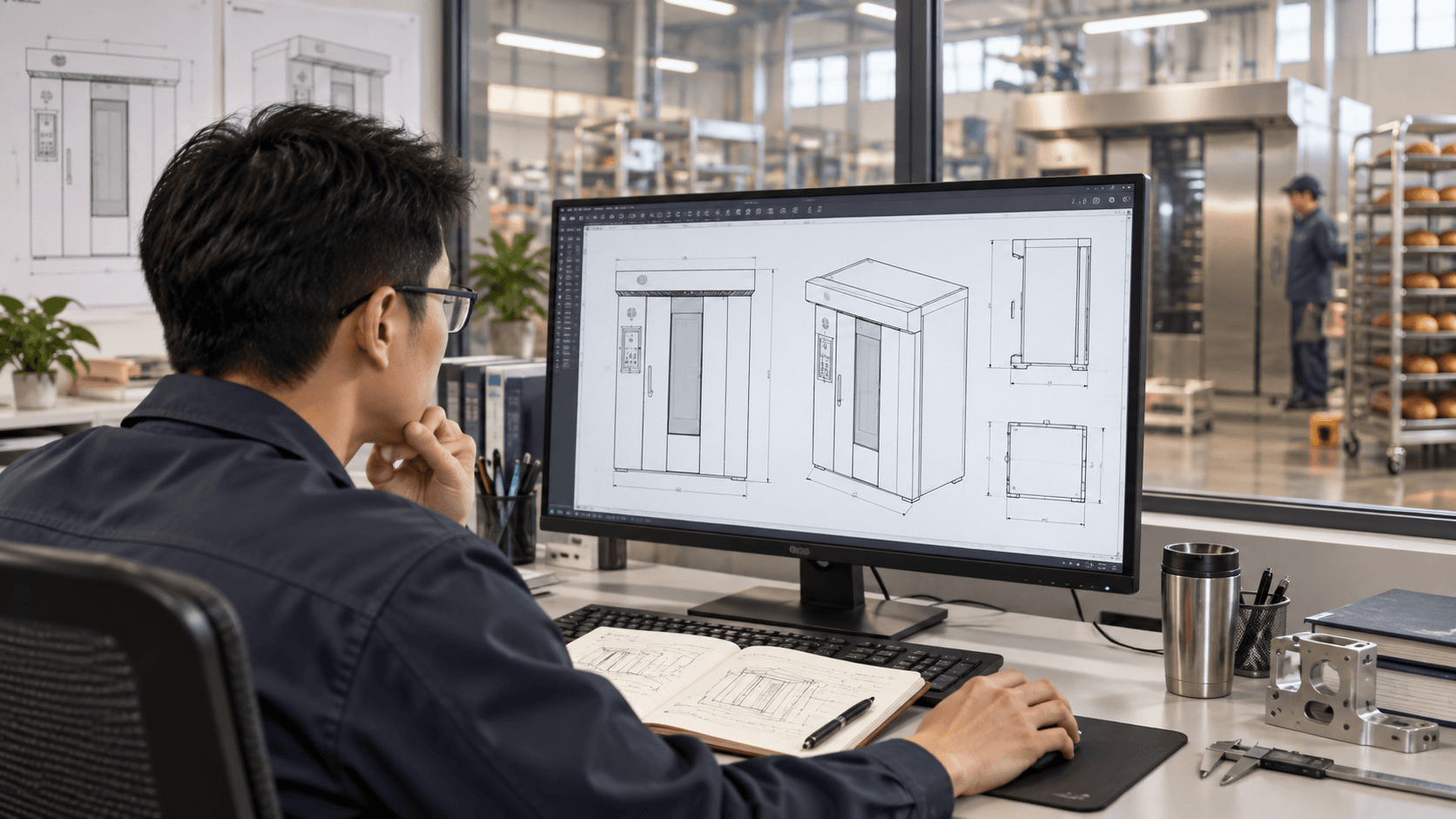
Give each bidder the target piece weight, shape, cross-section, filling position and acceptable variation. Document both shell doughs if two colours or textures are required, plus filling viscosity, temperature, particulates and allergen status. A product drawing and representative formula are more useful than the phrase filled cookie alone.
State the intended downstream surface and oven route, but keep the filling decision separate from the choice between a direct oven band and trays. A satisfactory deposit must retain its structure through transfer and baking, so agree on a representative product trial.
Define separate material and head interfaces
Ask how each dough stream reaches the forming head, how the filling is supplied and how its dosing is controlled against the shell. GEA describes a co-extruder with two independent dough heads and a third fluid-filling feed; that is a documented configuration example, not proof that every filling or dough can run on every machine.
Request a flow diagram showing hoppers, pumps, hoses, pressure limits and the point where the streams meet. Identify who supplies and cleans each component. If the filling is chilled or contains inclusions, obtain model-specific limits and a trial rather than assuming a standard pump is suitable.
Specify tooling, controls and changeover
List nozzle geometry, outlet count, working width, cut-off method and the recipe parameters that govern shell-to-filling ratio. Ask whether a new product needs a different die, pump or control option. A machine capable of co-extrusion in a brochure may be quoted with fewer heads or accessories.
Map disassembly and cleaning of both dough paths and the filling path. The buyer should define allergen segregation, inspection and first-piece release procedures. Ask for access and part identification on the exact offered configuration.
Make the trial an RFQ acceptance gate
Provide representative ingredients and agree who prepares the mix, sets temperatures and records the settings. Measure piece weight, filling position, shell integrity and rejects at start-up and during a stable run against buyer-approved limits. Include a controlled stop and restart if that occurs in the planned shift.
Record the approved tooling, programme, product sample and cleaning method with the purchase specification. Do not infer continuous output from a short demonstration or apply another supplier’s published speed to the proposed recipe.
Frequently Asked Questions
Will a plain-cookie depositor make filled products?
Only if the offered configuration has the required separate material feeds, head and tooling and passes a representative trial.
Can the same nozzle serve every filling?
Do not assume it. Confirm filling properties, product geometry and model-specific tooling with the supplier.
What should be tested before ordering?
Use the intended doughs and filling to check piece geometry, weight, filling position, restart behaviour and cleaning.
Continue planning
Plan Your Bakery Equipment Project
Send product drawings, shell dough and filling details, target output and oven route. Shanghai Hongzhong can help define the co-extrusion configuration and trial scope for your RFQ.
Get a Quote →