Buying Guide · proofer vs retarder proofer
Proofer vs. Retarder-Proofer: Which Fits Your Bakery Schedule?
Introduction
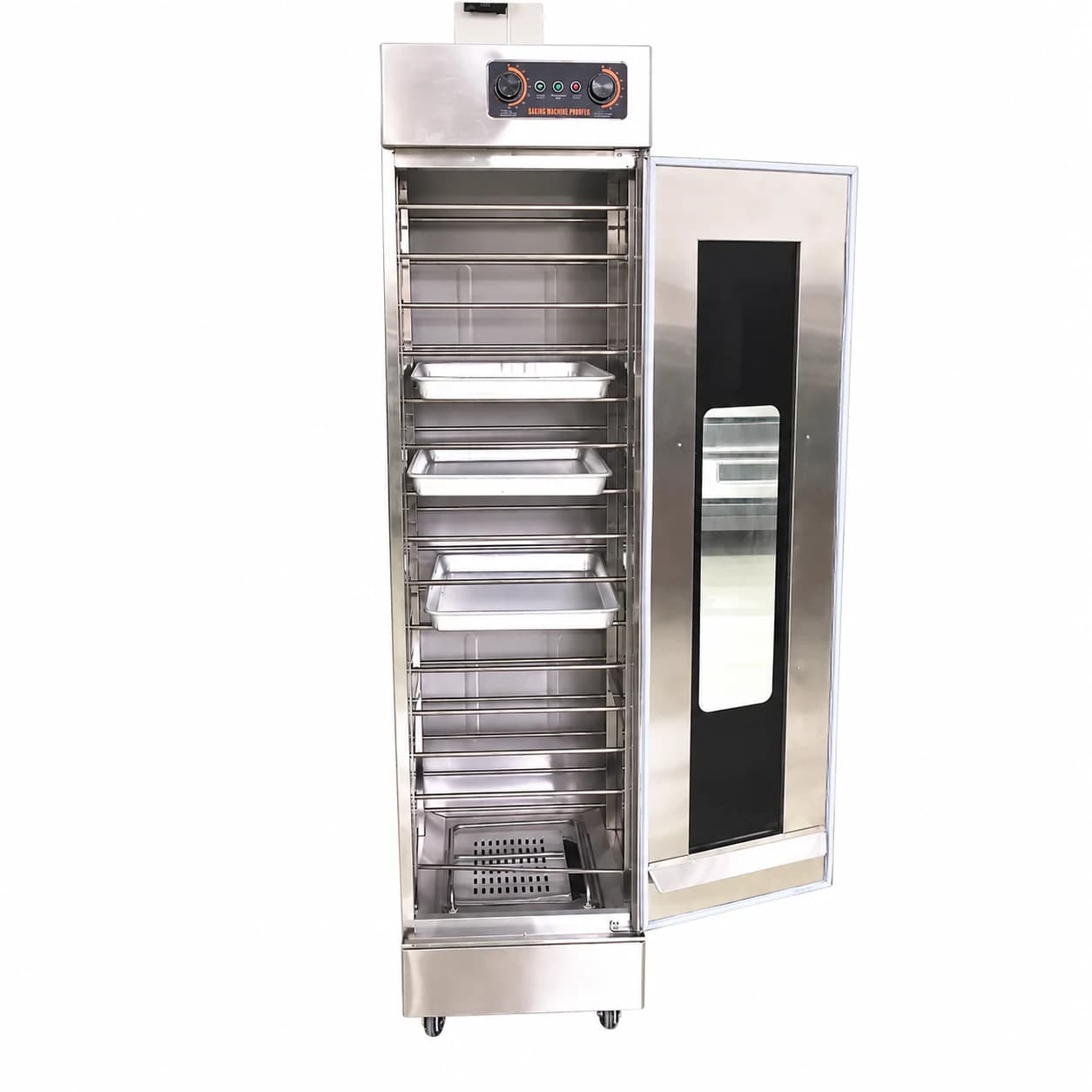
A proofer provides a controlled environment for the final rise of shaped dough. A retarder-proofer adds a refrigerated stage so a bakery can manage fermentation across a longer production schedule. Choose between them by examining when dough is mixed, when staff are available and when products must reach the oven. Cabinet size alone cannot answer that question.
For an overseas equipment buyer, the difference affects much more than purchase price. Refrigeration, water, drainage, electrical supply, loading patterns and service arrangements can change the installation scope. A cabinet that appears to solve an early-morning staffing problem may create another bottleneck if it cannot accommodate the actual rack or move the full product load through the agreed stages.
This guide explains how to build a schedule-based specification, compare the two equipment types and prepare a useful product trial. It provides purchasing methods rather than a universal fermentation recipe. Any calculations are hypothetical examples, not measured Hongzhong equipment performance.
1. What does each type of equipment actually do?
A proofer supports the final fermentation stage
In a normal bread production sequence, dough is mixed, divided and shaped before final proofing and baking. A proofer helps control the environment around the dough during that final rise. The proposed machine's temperature and humidity capabilities should be reviewed against your products and operating procedure.
The cabinet does not determine the recipe or automatically correct dough that entered at an unsuitable condition. Ingredient temperature, mixing, intermediate handling and the time before loading remain part of the process. Treat the machine as one controlled stage within production, rather than as a substitute for a defined dough procedure.
A retarder-proofer adds refrigerated scheduling
A retarder-proofer combines a refrigerated stage with proofing functions in an agreed sequence. Depending on the equipment and program, the objective may be to hold prepared dough and bring it toward a baking-ready condition at the required time.
Baxter's manufacturer description distinguishes proofing temperature and humidity controls from the retarding temperature setting. This supports the basic functional distinction, but its specifications do not establish the performance of another supplier's cabinet. Source: Baxter retarder/proofers.
Ask the supplier to describe every stage of the proposed sequence and the conditions needed at entry. Do not assume that a standard proofer includes refrigeration, or that a refrigerated storage cabinet can perform a controlled proofing program.
2. Begin with the time the bread must be ready
Work backward from the required oven loading times. Record the quantities needed for each dispatch, shop opening or production handover. Then identify when shaped dough can be prepared and who will be present to load, unload and respond to an interruption.
For example, a bakery may need its first oven load ready before its normal mixing team arrives. Another bakery may run a continuous daytime schedule with little reason to hold shaped dough overnight. These two operations can require different equipment even if their daily flour use is similar.
Build a simple production timeline
Use one row for each product family and include mixing, dividing, shaping, holding, proofing, oven loading and cooling. Mark which stages depend on people and which are intended to run under an approved automatic program.
Include the transition between shifts. A program that finishes while nobody is available to unload the cabinet may not deliver the intended scheduling benefit. Also identify what happens when the oven is delayed: the proofing cabinet should not be treated as an unlimited buffer for finished proofed dough.
Distinguish labour savings from labour movement
Moving preparation to the previous shift can change staffing requirements, but it does not automatically eliminate the work. Staff still need to load racks, check product condition, clean the equipment and manage exceptions.
Before describing a system as labour-saving, compare the complete schedule. Include any extra handling, monitoring or cleaning created by the refrigerated stage. A practical purchase decision uses documented duties rather than an unsupported percentage saving.
3. Compare the capabilities that matter to your products
| Question | Proofer | Retarder-proofer |
|---|---|---|
| Main scheduling role | Support final rise before baking | Combine refrigerated holding and proofing within a defined schedule |
| Refrigeration | Must not be assumed | Confirm system design and supply scope |
| Product evidence | Loaded proofing trial | Trial covering the complete agreed sequence |
| Site review | Electricity, water and other specified services | Those services plus refrigeration-related installation needs |
| Main uncertainty | Product consistency at actual loading | Product consistency after holding and stage transitions |
Use this comparison to structure questions, not to declare that one equipment type is always better. The useful choice depends on whether the additional functions solve a real production requirement.
Do all products share the same program?
Different products can reach the desired condition at different times. A cabinet full of mixed recipes may therefore require separate schedules, compartments or another production arrangement. Ask the supplier what can be controlled independently and what remains common to the entire chamber.
Do not assume that a digital controller means every rack has its own independent environment. Request an explanation of what the sensors measure, what the controller regulates and which product combinations have been reviewed.
4. Size the working load rather than counting empty shelves
Tray count is meaningful only when tray dimensions, product height, spacing and the handling arrangement are defined. Provide external tray dimensions and rack details, not just a nominal tray description. Include handles, protrusions and any features that affect door clearance.
Confirm how many trays or racks can be loaded while preserving the manufacturer's intended air movement. Do not increase the advertised load by inserting extra shelves or reducing spacing without approval.
Use occupancy time in capacity calculations
Assume, only for planning, that the oven needs one rack every 20 minutes and a particular final-proof stage occupies a rack for 60 minutes. Three racks would be in that stage at steady flow, before allowing for transfer timing and schedule variation.
The calculation is 60 minutes divided by 20 minutes between releases. It does not establish that any cabinet has adequate airflow, recovery or control for three racks. It also does not include a refrigerated holding stage, which may keep a much larger part of the next shift's production inside the system.
If your interest is specifically the number of racks required, use the existing proofer capacity RFQ guide. This article focuses on whether refrigeration and programmed scheduling belong in the project at all.
Check both the largest and smallest normal loads
A full chamber and a partly loaded chamber can present different operating conditions. Include both in the application review. Define where racks are placed during a partial load and how the bakery will follow that arrangement in daily use.
If several doors or compartments are proposed, ask how opening one section affects the others. The answer should come from the actual design and trial evidence rather than a general statement that more doors always improve control.
Review your production schedule before choosing a cabinet. Send your requirements, including product types, tray or rack dimensions, preparation times and required oven loading times. Ask whether a standard proofer or a refrigerated solution needs further technical review.
5. What should a meaningful product trial include?
Define the starting condition
Record the product, piece weight, dough temperature, handling history, tray arrangement and time between shaping and cabinet entry. If ingredients differ from those used at your bakery, document the substitution and the limits of the comparison.
A trial with convenient local dough can demonstrate controls and handling. It cannot prove identical results for your formulation. Where the purchasing decision depends on product quality after a long holding period, the test should represent that period and the important recipe characteristics.
Test the full proposed schedule
For a proofer, assess normal loading, the proofing stage and readiness for the oven. For a retarder-proofer, include the refrigerated period and subsequent transitions, rather than showing only the final warm stage.
Record programmed settings and independent observations separately. A controller display shows what the system reports; it is not a complete record of dough condition at every position. Use an agreed measurement method and identify the positions observed.
Evaluate the baked result
Compare the products after baking under controlled conditions. Record the attributes that matter commercially, such as acceptable size, appearance, handling and consistency. The appropriate criteria depend on the product and should be agreed before the trial.
Do not accept an isolated photograph of attractive bread as proof of the entire schedule. Link sample identification to the cabinet program, load and oven conditions. If adjustments are needed, record the revised process and repeat the relevant part of the test.
6. Review utilities before shipping the equipment
Electrical and refrigeration scope
Specify voltage, phase and frequency individually. Do not apply one electrical assumption to every US or African site. Have the responsible local professional review the proposed supply and the installation documentation.
For refrigerated equipment, identify which refrigeration components are included and which are supplied or installed locally. Request the requirements for heat rejection, service access and any relevant connections. A quotation that lists only the cabinet can conceal significant project work.
Rated electrical power is expressed in kW. Actual energy consumption is measured in kWh over an operating period. Do not turn the rating into a fixed hourly bill without considering the complete holding and proofing schedule.
Water, drainage and the room
Ask whether the machine requires a water connection, what water conditions are specified and whether drainage is required. Obtain the manufacturer's actual instructions rather than assuming every humidity system uses the same arrangement.
Inspect the room conditions and access route. Allow space to move racks, open doors, remove service components and clean the surrounding area. A cabinet that fits the floor plan may still be difficult to install if the delivery route or maintenance space has been overlooked.
7. Plan for interruptions and operational exceptions
Ask what happens after a power interruption, water-supply problem or control alarm. Establish how the operator identifies the affected stage and decides what to do next. Do not assume that restarting the machine automatically restores the dough to the intended condition.
Equipment restart instructions and product-disposition decisions are separate matters. The bakery needs a suitable procedure for assessing interrupted batches. That procedure should be based on its products and operating responsibilities, not a promise that every batch can always be recovered.
Keep schedule changes visible
An extra order, a late shift or an oven fault can change the required release time. Ask how an authorised operator can revise the schedule and what effect that has on the load already inside.
Avoid choosing a system around a single perfect day. Test the normal exceptions that your team can reasonably anticipate. However, do not ask a cabinet to compensate for unlimited upstream delays or an oven that is regularly unavailable.
Identify the support route
Confirm who diagnoses faults, what information they require and how replacement parts are identified. Refrigerated equipment may need skills and service arrangements beyond those used for a basic proofing cabinet.
Ask for manuals, alarm information and the maintenance schedule before delivery. Do not infer local service coverage or guaranteed response times from the existence of a website or a generic export brochure.
8. Compare quotations and inspect the shipment
Make commercial promises measurable
If the proposed benefit is a later staff start time, write down the preparation and release times that support that benefit. If the objective is a more consistent first oven load, identify the sample attributes and operating conditions to be reviewed. A clear objective helps the supplier propose the right equipment and prevents the project from drifting toward unnecessary functions.
Keep unresolved points in a short acceptance log. For each item, identify who will supply the missing information and whether it affects ordering, factory testing or installation. A refrigeration detail that remains unknown should not disappear from the record simply because the cabinet dimensions have been approved. Closing these points in sequence makes the final recommendation easier for purchasing and production teams to assess together.
An itemised quotation should identify the equipment type, working load, control functions, utilities, refrigeration scope where applicable and exclusions. Attach the agreed schedule and trial requirements so the proposal addresses a process rather than just a cabinet size.
Before shipment inspection, compare the machine identity, electrical configuration, rack arrangement, loose accessories and documentation against the order. Close outstanding test actions before dispatch. Inspection of packing and accessories does not repeat a complete fermentation trial unless that work is explicitly included.
Agree how the cabinet will be protected during transport and how unloading will be organised. International sea freight, insurance, destination charges and installation are not automatically included. Do not assume free shipping; compare quotations using the same named delivery basis.
Browse the Hongzhong equipment catalogue for the current listed range. A listed proofer is not evidence that every refrigerated or programmable configuration discussed here is available. Request confirmation of the exact proposed solution.
FAQ
Can a normal proofer hold dough overnight under refrigeration?
Not unless refrigeration is specifically included and approved for that purpose. A standard proofing function does not establish refrigerated holding capability. Confirm the complete machine specification and intended process before relying on an overnight schedule.
Does a retarder-proofer automatically improve bread quality?
No universal improvement can be promised. Results depend on the recipe, entry condition, program and subsequent baking. The useful question is whether the proposed sequence produces your accepted product consistently while supporting the required production schedule.
What temperature and humidity should I request?
Provide the process requirements developed for your products and ask the supplier to review them. There is no single setting suitable for all breads. Confirm operating ranges and assess the actual loaded process instead of choosing equipment from one generic recipe setting.
Can different breads share one cabinet?
Possibly, when their requirements and release times are compatible. Check which conditions are common to the chamber and which can be controlled separately. A mixed-load trial is more useful than assuming that separate racks create independent environments.
Which information makes an RFQ useful?
Send your product range, tray and rack dimensions, normal and peak loads, preparation times, oven loading schedule, utilities and destination. Identify whether overnight holding is required. Ask the supplier to separate confirmed functions from those needing application testing.
Conclusion
Choose a proofer when controlled final proofing meets the production requirement. Investigate a retarder-proofer when refrigerated scheduling solves a defined problem and the complete sequence can be verified. In both cases, size the working load and validate the product rather than relying on empty-cabinet capacity.
Request a schedule-based equipment review
Contact Shanghai Hongzhong with your products, rack dimensions, preparation schedule and required baking times. Request a clearly scoped recommendation and quotation. Refrigeration, utilities, trial arrangements, freight and installation responsibilities should be confirmed before ordering.